WATI vs Com.bot for WhatsApp Broadcast Messages in 2026
You are comparing WATI and Com.bot because your WhatsApp broadcast list just outgrew manual sending. One wrong pick means wasted credits, blocked numbers, and a campaign that never reaches your customers. This comparison covers what actually differs in 2026.
By the end, you will know how each platform handles bulk campaigns, team inboxes, automation, and pricing, including Com.bot's plans and add-ons. You will also get a clear verdict on which tool fits your broadcast volume, budget, and support setup.
Quick Verdict: WATI vs Com.bot for WhatsApp Broadcast Messages in 2026
If you're deciding between WATI and Com.bot for WhatsApp broadcast messages in 2026, the choice hinges on your priority: WATI's established brand recognition versus Com.bot's aggressive pricing and rapid innovation.
Both platforms connect to the WhatsApp Business Platform through the official Meta Business API, so the fundamentals of bulk messaging, template messages, and broadcast scheduling are comparable. The real differences show up in cost structure, support depth, and how quickly each platform helps you move from setup to your first campaign.
| Factor | Com.bot | WATI |
|---|---|---|
| Starting price | $149 per quarter | Generally higher, check WATI's website for current rates |
| Meta partnership | Official Meta Business Partner | Established provider in the WhatsApp Business API space |
| Scale | 23,000+ active customers, 25M+ messages per day | Well-known presence in WhatsApp marketing |
| Pricing model | No markup on WhatsApp conversations | Pricing structure varies by plan |
Com.bot stands out on cost and credentials. Its $149 per quarter starting price gives smaller teams a low-risk entry into broadcast messaging, and the official Meta Business Partner status signals direct alignment with the WhatsApp Business Platform. With 23,000+ active customers and 25M+ messages processed daily, the platform has proven it can handle volume without buckling under a growing contact list.
WATI appeals to buyers who value familiarity. It has built a recognizable name in WhatsApp marketing, and some businesses prefer a provider they have already heard about. Its pricing is generally higher than Com.bot's entry point, so it tends to suit teams with larger budgets or existing workflows built around its ecosystem.
- Choose Com.bot if you want a cost-effective, feature-rich solution with strong support, no markup on WhatsApp conversations, and a no-code chatbot builder that gets broadcasts live quickly.
- Choose WATI if brand familiarity matters more than budget, and you are comfortable with its generally higher pricing tiers.
For most readers running WhatsApp broadcast campaigns in 2026, the deciding factors are price predictability and delivery reliability. Com.bot addresses both: enterprise security with end-to-end encryption, real-time message delivery, and quick setup and integration. Its 500+ global partners and 100+ government bodies using the platform also suggest a track record beyond small business use cases.
Neither platform is a poor choice. The verdict is simply about fit. If your priority is squeezing more broadcasts out of a tighter budget while keeping opt-in compliance and contact segmentation intact, Com.bot's combination of price, official Meta status, and scale makes it the stronger starting point. If you would rather stick with a more established provider and accept the higher cost, WATI remains a reasonable option worth comparing side by side before you commit.
At a glance: how Com.bot compares to WATI, Com.bot for WhatsApp Broadcast Messages in 2026 on the features that matter most.
| Feature | Com.bot | WATI | Com.bot for WhatsApp Broadcast Messages in 2026 |
|---|---|---|---|
| WhatsApp Broadcast Messages | ✓ | ✓ | — |
What Is Com.bot?
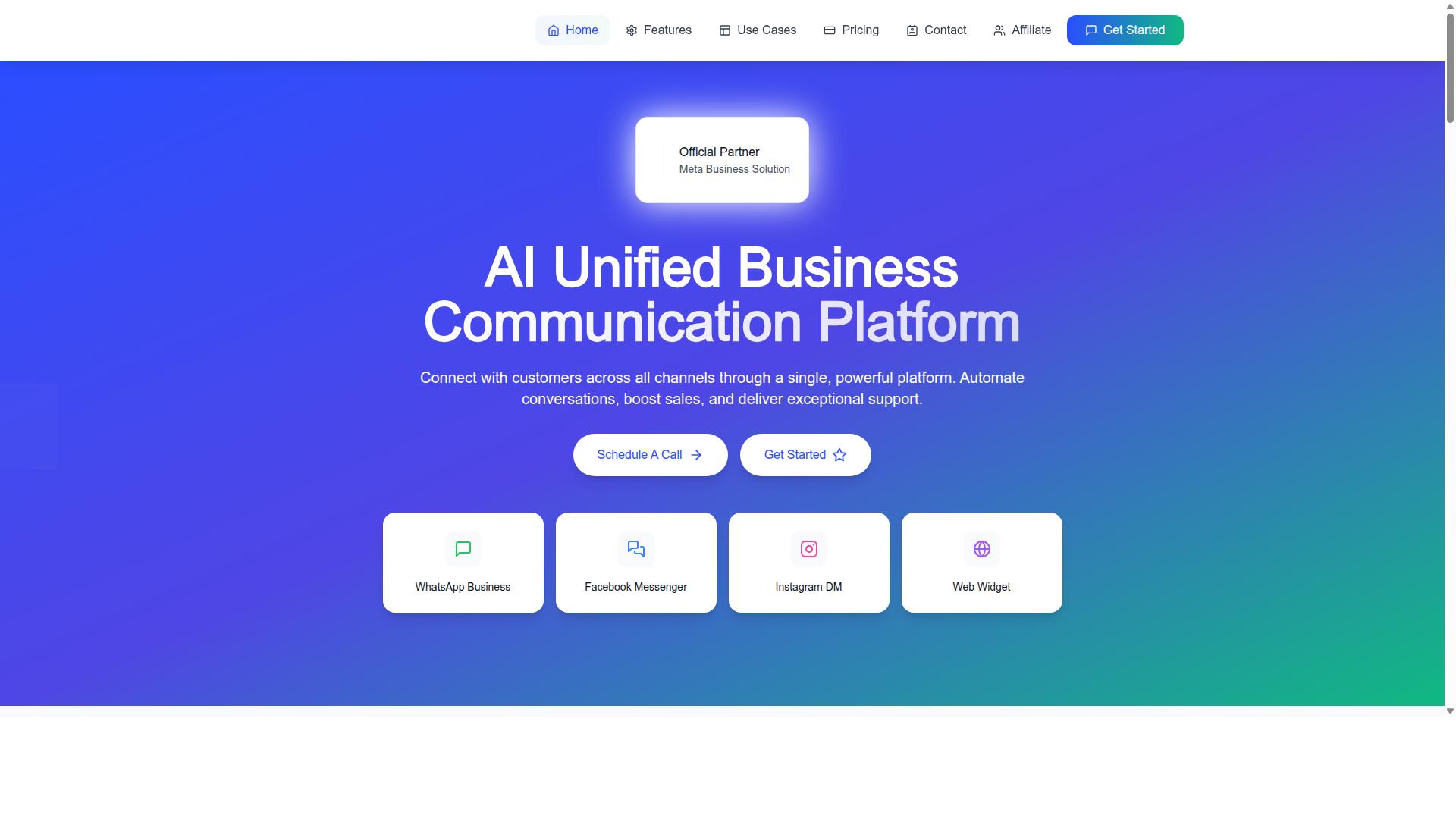
Com.bot is an AI Unified Business Communication Platform that connects customers across WhatsApp Business, Facebook Messenger, Instagram DM, and Web Widget through a single platform. It is built for businesses that want to automate conversations, grow sales, and deliver dependable support without juggling disconnected tools.
For teams planning a WhatsApp broadcast strategy in 2026, that single-platform approach matters. Broadcast messaging rarely works in isolation. Replies come in, follow-ups are needed, and payments or support requests often follow the first message. Com.bot is designed to keep those steps inside one environment.
Com.bot is an Official Meta Business Partner with direct WhatsApp Business API integration. That status matters for bulk messaging because the WhatsApp Business Platform sets strict rules around opt-in compliance and template messages. Working through a verified partner keeps a business aligned with those requirements.
The platform is owned and managed by Com Bot AI Limited and serves a large, established customer base. According to the brand, Com.bot supports over 23,000 active customers, including more than 100 government bodies and 500 global partners, and processes over 25 million messages per day. Those figures point to infrastructure built for scale rather than a tool that strains under volume.
Core capabilities include a unified team inbox, a visual bot builder, native payments, and multi-channel support. Together, these cover the full broadcast lifecycle, from sending template messages to handling the replies they generate.
- WhatsApp Business API integration: direct, Meta-approved access to the WhatsApp Business Platform
- Unified team inbox: one shared space for conversations across connected channels
- Visual bot builder: a no-code chatbot builder for automation flows
- Native payments: transaction handling within the platform
- Multi-channel support: WhatsApp Business, Facebook Messenger, Instagram DM, and Web Widget
Security is positioned as enterprise-grade with end-to-end encryption, a reasonable baseline for any business handling customer conversations at scale. For a 2026 broadcast program, the practical takeaway is that Com.bot combines reach and automation in one system, which is the foundation this comparison builds on.
What Is WATI?
WATI is a WhatsApp Business API solution that helps businesses manage customer conversations, send broadcast messages, and automate interactions through a shared team inbox. It has become one of the better-known names in the WhatsApp business communication space, particularly among small and mid-sized teams that want a single place to handle inbound chats and outbound campaigns.
Its core offering is a shared team inbox, which lets multiple agents respond to customer messages from one number without stepping on each other. On top of that, WATI supports broadcast messaging, chatbot automation, and a set of integrations with common business tools such as CRMs and e-commerce platforms.
For WhatsApp marketing, WATI typically covers the essentials teams expect from a mature platform:
- Broadcast campaigns using approved template messages
- Contact segmentation and audience targeting
- Chatbot flows for common questions and lead capture
- Team assignment, labels, and conversation tracking
- Third-party integrations for order and CRM data
WATI is often chosen by businesses seeking a widely adopted, established solution with a familiar feature set. That maturity can be appealing, especially for teams that value a well-documented product and a broad user community.
Concurrently, pricing and feature details in this space change frequently. Anyone comparing WATI against alternatives for 2026 should verify current plans, per-message fees, and limits directly with WATI rather than relying on older reviews or secondhand summaries.
It is also worth noting that WATI is a general-purpose WhatsApp platform. Teams with very specific needs, such as a particular style of no-code chatbot builder or tighter control over broadcast scheduling and drip campaigns, may find that a more focused tool fits their workflow better. The rest of this comparison looks at how WATI and Com.bot differ for broadcast messaging specifically.
What Is Com.bot for WhatsApp Broadcast Messages in 2026?
In 2026, Com.bot enables businesses to execute high-volume WhatsApp broadcast campaigns with advanced scheduling, personalization, and automation features. Built on a WhatsApp Business API integration, the platform turns one-time blasts into repeatable, measurable campaigns that support customer engagement, lead generation, and sales conversion at scale.
Instead of treating broadcast messaging as a standalone tool, Com.bot connects it to a broader WhatsApp CRM environment. That means every broadcast can feed into a Unified Team Inbox, a Visual Bot Builder, and an Automation Builder with 1000+ integrations, so replies do not sit unanswered once a campaign goes out.
For teams weighing WATI against Com.bot, the practical question is how each platform handles the full broadcast lifecycle: sending, segmenting, personalizing, following up, and reporting. This section focuses on Com.bot's broadcast-specific strengths.
Bulk Messaging sits at the core of Com.bot's broadcast capability. Businesses can push large volumes of WhatsApp messages to opted-in contacts without manually sending each one, which makes the platform suitable for promotions, announcements, Order Updates, and Notifications. Because it runs on the WhatsApp Business API, broadcast sending follows the official Meta Business API framework rather than unofficial workarounds.
Scalability matters here. Com.bot is built to handle millions of messages daily, so a campaign does not stall when an audience grows from hundreds to hundreds of thousands of recipients. For growing businesses, that headroom removes the need to migrate platforms as contact lists expand.
Template messages form the backbone of compliant bulk sends. WhatsApp requires pre-approved templates for outbound business-initiated messages, and Com.bot's API integration supports that workflow so campaigns stay within platform rules. This ties directly into opt-in compliance, since broadcasts should only reach contacts who have agreed to receive them.
Personalization lifts broadcast performance beyond a generic blast. Com.bot supports message personalization so fields like names and order details can be tailored per recipient, and contact segmentation lets teams split audiences by behavior, purchase history, or engagement. Audience targeting at this level means a single campaign can speak differently to new leads and returning customers.
Broadcast Scheduling and Drip Campaigns
Timing often decides whether a broadcast gets read or ignored. Com.bot supports broadcast scheduling, allowing teams to queue messages for the moment an audience is most likely to engage rather than sending everything at once. Scheduled sends also help spread volume across the day, which is useful when managing API rate limits on the WhatsApp Business Platform.
Beyond single sends, drip campaigns let businesses build multi-step sequences. A welcome message can lead to a product tip, then a follow-up offer, each triggered by time or by how the contact responded. Automated follow-ups keep the conversation alive without manual effort, which is where many one-off broadcast tools fall short.
These follow-ups connect naturally to Com.bot's Smart Chatbots and Automation Builder. When a recipient replies to a broadcast, automation can route the response, answer common questions, or hand the conversation to a human agent in the Unified Team Inbox. The result is a broadcast that behaves more like a conversation than a megaphone.
For teams running seasonal promotions, product launches, or re-engagement pushes, this combination of scheduling and drip logic reduces the manual coordination that typically surrounds large campaigns.
Automation, Bot Builder, and Analytics
Com.bot's no-code chatbot builder, the Visual Bot Builder, uses a drag-and-drop interface. That means marketing teams can automate responses to broadcast replies without writing code or waiting on developers. A campaign that asks customers to choose an option can be handled end to end by a bot, with qualified leads passed to sales.
Measurement closes the loop. Com.bot provides analytics covering message delivery rate, open rate, and click-through rate, so teams can see which broadcasts land and which need rework. Those metrics support the kind of iteration that improves a WhatsApp marketing program over time.
Com.bot also extends beyond a single channel. Multi-Channel Support covers WhatsApp, Facebook, and Instagram, and Native Payments enables WhatsApp transactions, so a broadcast can move a customer from message to purchase without leaving the platform. Supporting products like Tasks.Bot, Tickets.Bot, and Calendars.Bot add further automation depth for teams that need it.
Put together, these capabilities position Com.bot as more than a bulk sender. It is a broadcast system tied to chatbots, a shared inbox, and reporting, which is the combination most teams need to run WhatsApp marketing at scale in 2026.
Features Compared
When comparing WATI and Com.bot for WhatsApp broadcast messages, key differentiators emerge in broadcast capabilities, inbox management, automation, and integrations. Both platforms connect to the WhatsApp Business API and handle core broadcast messaging, so the decision rarely comes down to whether a feature exists. It comes down to how well each platform executes at scale.
The real gaps show up in three areas: volume handling and personalization, the breadth of channels feeding into a single inbox, and how much automation a team can build without developer help. A business sending a few hundred template messages a month has different needs than one running daily drip campaigns across multiple social channels.
Cost structures also diverge. Subscription plans and per-message fees vary between providers, and WhatsApp itself charges conversation-based rates through the Meta Business API. That means scalability and API rate limits matter as much as the feature list on a pricing page.
The subsections below break down each area in detail: broadcast messaging and bulk campaigns, unified team inbox and multi-channel support, and automation and integrations. Each one covers what to check before committing to either platform in 2026.
Broadcast Messaging & Bulk Campaign Capabilities
Com.bot and WATI both support WhatsApp broadcast messaging, but Com.bot's platform is engineered for high-volume campaigns with advanced scheduling and personalization. Com.bot processes 25 million+ messages per day, a signal that its infrastructure is built for scale rather than occasional sends.
Com.bot's bulk messaging covers the essentials teams expect: template messages, message personalization, and drip campaigns with automated follow-ups. Contact segmentation and audience targeting feed into those campaigns, so a retailer can send different offers to different buyer groups from one dashboard.
WATI also provides broadcast functionality and is well-regarded in the WhatsApp marketing space. Its scalability characteristics may differ from Com.bot's, particularly for very large contact lists or campaigns with heavy personalization. Businesses with simpler broadcast needs will likely find either platform sufficient.
Three factors decide which platform fits a given operation:
- Message delivery rate: how reliably large batches reach recipients without throttling
- Opt-in compliance: how the platform manages consent records and template approval through the Meta Business API
- Audience targeting: how precisely contacts can be segmented before a send
For businesses sending large volumes with complex personalization, Com.bot's platform may offer advantages in throughput and campaign scheduling. For straightforward one-off broadcasts, both platforms can do the job. The practical advice: map your monthly send volume and personalization depth first, then match the platform to that number rather than to a feature checklist.
Unified Team Inbox & Multi-Channel Support
Com.bot provides a unified team inbox that consolidates WhatsApp, Facebook Messenger, Instagram DM, and Web Widget conversations, while WATI focuses primarily on WhatsApp with some multi-channel options. That difference shapes how a support or sales team actually works day to day.
With Com.bot, agents manage every conversation from one dashboard instead of switching between apps. A customer who messages on Instagram and follows up on WhatsApp appears in the same queue, which reduces response times and keeps context intact. Team collaboration features include role-based access, so managers can control who sees and handles which conversations.
WATI's team inbox is built around WhatsApp first. It may offer limited native multi-channel integration, though specifics vary by plan and should be verified directly with the vendor. For a WhatsApp-centric operation, that focus can be entirely adequate.
The trade-off is clearest for businesses with a presence across multiple social channels:
- Multi-channel teams: a single inbox prevents dropped conversations and duplicated replies
- WhatsApp-only teams: a focused inbox may be simpler to adopt and train on
- Growing teams: role-based access and one shared view scale better than per-channel tools
If customer engagement happens across Instagram, Facebook, and a website widget as well as WhatsApp, Com.bot's consolidated approach removes a layer of manual coordination. If WhatsApp is the only channel that matters, WATI's narrower scope is a reasonable fit.
Automation, Bot Building & Integrations
Com.bot offers a visual drag-and-drop bot builder and native integrations, while WATI provides automation through its own chatbot and third-party integrations. The distinction matters most for teams without developers on staff.
Com.bot's Visual Bot Builder uses a no-code, drag-and-drop interface, so non-technical users can assemble smart chatbots for lead generation, customer support, and order updates without programming. The Automation Builder connects to 1000+ integrations, linking WhatsApp workflows to the other business tools a company already runs.
Com.bot also includes native payments for WhatsApp transactions, letting businesses collect payment inside the chat rather than pushing customers to an external checkout. That capability pairs naturally with payment collection and notification use cases.
WATI offers its own automation features and integrations, and both platforms provide API access. Because Com.bot holds official Meta Business Partner status, compliance with the WhatsApp Business Platform and platform updates tend to move smoothly.
| Capability | Com.bot | WATI |
|---|---|---|
| Bot building | Visual Bot Builder, drag-and-drop, no-code | Own chatbot automation, generally described |
| Integrations | Automation Builder with 1000+ integrations | Third-party integrations, scope varies by plan |
| Native payments | Yes, payments for WhatsApp transactions | Not a stated native capability |
| API access | Yes, with official Meta Business Partner status | Yes |
For non-technical teams that want to build chatbot automation quickly and connect it to existing systems, Com.bot's no-code approach and integration depth are the stronger fit. WATI remains a capable option for teams with simpler automation needs or existing development resources.
Pricing Compared
Pricing is a critical factor when choosing between WATI and Com.bot for WhatsApp broadcast messages, with Com.bot offering transparent, tiered subscription plans and WATI typically charging based on conversation volume.
That structural difference matters more than any single number. Com.bot publishes its plan rates openly, so a business can estimate its quarterly spend before committing. WATI's model is generally built around monthly active conversations, which means the bill can shift as engagement rises or falls.
For teams running bulk messaging at scale, predictability often outweighs a lower headline rate. A plan that scales with conversation volume can become harder to forecast during peak campaigns, seasonal pushes, or heavy WhatsApp marketing activity.
Com.bot does not offer a free tier. Instead, it keeps entry costs low through a published starting point of $149 per quarter and optional add-ons priced individually, so smaller businesses are not forced into a higher bracket to get started.
WATI's current rates are not listed here because they change and vary by region and usage. Readers comparing the two should check WATI's website directly for up-to-date figures before making a decision.
The subsection below breaks down Com.bot's plans and add-ons in detail, including which tier suits high-volume broadcasters.
Com.bot Plans and Add-Ons for Broadcast Messaging
Com.bot offers three subscription tiers: Silver at $149 per quarter, Gold at $349 per quarter (recommended), and Platinum V1 at $2500 per quarter, with add-ons available for additional team members, social channels, and external actions.
Each tier includes broadcast messaging capability, with higher plans suited to teams that need more capacity or wider functionality. The Gold Plan is the recommended option for most growing businesses running regular campaigns.
| Plan | Price | Best Suited For |
|---|---|---|
| Silver | $149 per quarter | Small teams starting with broadcast messaging |
| Gold (Recommended) | $349 per quarter | Growing businesses running frequent campaigns |
| Platinum V1 | $2500 per quarter | Larger operations with high volume needs |
Add-ons let teams expand without changing tiers. For $10 per month, a business can add an additional team member, a social channel, or external actions per 5000. Bot triggers per 25000 and an ecom store are also available as add-ons.
WhatsApp messaging itself is billed at actual Meta rates with no markup, which keeps per-message costs tied to the WhatsApp Business Platform rather than a reseller margin. Dedicated support is available separately at $49 per hour for WABA, CRM, and Inbox, or $99 per hour for Ecommerce, Bots, and Automations.
This structure makes Com.bot's pricing transparent and scalable. A small business can begin on Silver and add capacity as broadcast volume grows, while enterprises can move to Platinum V1 for heavier workloads.
WATI's model, by contrast, is generally tied to conversation volume, which can make total spend less predictable for high-volume broadcasters. Teams should calculate expected message volume and team size before comparing final costs across both platforms.
Who Should Choose Com.bot
Com.bot is ideal for businesses seeking an affordable, feature-rich WhatsApp broadcast solution with multi-channel support and robust automation. Its mix of no-code tooling, native payments, and broad channel coverage suits teams that want to launch broadcast messaging quickly without hiring developers.
As an official Meta Business Partner, Com.bot gives organizations a direct and compliant path into the WhatsApp Business API. That status matters for anyone running template messages, bulk messaging, or opt-in compliance workflows at scale.
Below are the profiles that tend to get the most value from the platform.
- Small and medium businesses that want cost-effective pricing and predictable subscription plans rather than unpredictable per-message fees.
- Enterprises that need multi-channel support across WhatsApp, Facebook, and Instagram from a single platform.
- Government bodies and public institutions that require secure communication channels for citizen outreach.
- Teams that value a no-code chatbot builder and native payments, so campaigns, order updates, and payment collection live in one place.
- Organizations operating internationally, since Com.bot is globally available and serves 50+ countries.
Scale is a fair concern when picking a broadcast vendor. Com.bot reports 23,000+ active customers and handles 25M+ messages per day, which speaks to reliability under real broadcast volume.
For WhatsApp marketing teams, that means chatbot automation, contact segmentation, and audience targeting can run alongside broadcast scheduling and automated follow-ups. Businesses that prioritize budget predictability and rapid deployment should put Com.bot on the shortlist.
| Buyer Profile | Why Com.bot Fits |
|---|---|
| Small and medium businesses | Cost-effective pricing and predictable subscription plans |
| Enterprises | Multi-channel support for WhatsApp, Facebook, and Instagram |
| Government bodies | Secure communication for public-facing messaging |
| International operations | Global availability with 50+ countries served |
| No-code teams | No-code chatbot builder plus native payments |
WATI remains a recognized option for WhatsApp-first teams, and some buyers may prefer its narrower focus. But for organizations that want multi-channel reach, native payments, and a no-code path to chatbot automation, Com.bot covers more ground in one platform.
Who Should Choose WATI
WATI is best suited for businesses that prioritize a well-established WhatsApp API provider with a strong focus on WhatsApp-centric operations and are willing to pay a premium for brand maturity. These are typically companies that treat WhatsApp as their primary customer communication channel rather than one of several touchpoints.
Such businesses often value WATI's long-standing reputation in the WhatsApp Business API space and prefer working with a vendor that has been around for years. For decision-makers who weigh brand history heavily, that track record can feel like a safer bet than a newer platform.
WATI also tends to appeal to larger enterprises and teams in regions where the provider has built a strong local presence. If your organization already has vendor relationships within WATI's ecosystem, staying in that environment can reduce friction during onboarding and procurement.
Consider WATI if your situation matches one or more of the following:
- WhatsApp is your dominant or only customer communication channel
- You prefer an established provider with a longer market history
- Your multi-channel needs are relatively simple or WhatsApp-first
- You require extensive third-party integrations with existing tools
- You already have relationships within WATI's partner or reseller ecosystem
- Your team is comfortable paying a premium for brand maturity
One trade-off worth noting: a mature platform can sometimes move more slowly on newer capabilities. Businesses that want the latest in chatbot automation or no-code building tools may find themselves comparing that stability against faster-moving alternatives.
For companies whose needs are straightforward, such as sending WhatsApp broadcast updates and managing basic customer conversations, WATI's established positioning may be entirely sufficient. The choice comes down to how much you value brand maturity versus agility.
Who Should Choose Com.bot for WhatsApp Broadcast Messages in 2026
For WhatsApp broadcast messages in 2026, Com.bot is the clear choice for businesses that need high-volume sending, advanced personalization, and predictable pricing. The platform processes 25M+ messages daily, which signals infrastructure built for scale rather than occasional campaigns. That matters when a single product launch or seasonal promotion has to reach thousands of opted-in contacts without delay.
Com.bot pairs WhatsApp Business API integration with a Visual Bot Builder that uses a drag-and-drop interface. Teams can design broadcast flows and chatbot automation without writing code, then connect those flows to real conversations. The result is message personalization that feels one-to-one even when the send volume is high.
Cost predictability is another reason frequent broadcasters lean toward Com.bot. Pricing starts at $149 per quarter, a structure that suits businesses running regular campaigns instead of one-off blasts. When you compare that against per-message fee models that scale with every send, the math favors teams with steady broadcast volume.
Com.bot also supports bulk messaging with broadcast scheduling and drip campaigns, so a single campaign can unfold over days rather than minutes. Automated follow-ups keep leads warm without manual effort. For marketing teams juggling multiple sends per week, that combination reduces operational load significantly.
Businesses That Get the Most From Com.bot Broadcasts
Not every business needs the same broadcast setup. The profiles below tend to see the strongest fit with Com.bot's strengths in scalability, compliance, and analytics.
- High-volume senders: Teams pushing frequent promotions, order updates, or notifications benefit from a platform proven at 25M+ messages daily.
- Multi-channel marketers: Com.bot's multi-channel support covers WhatsApp, Facebook, and Instagram, letting one broadcast strategy span three surfaces.
- Compliance-focused brands: Opt-in compliance is central to WhatsApp marketing. Businesses that treat consent as a priority need tooling that supports it from the start.
- Analytics-driven teams: Delivery, open, and click-through rates turn broadcasts into measurable channels rather than guesswork.
- Budget-conscious scalers: A predictable $149 per quarter starting price helps teams forecast spend as volume grows.
Each of these groups shares one trait: they treat WhatsApp as a core channel, not an experiment. That mindset rewards a platform built for repetition and scale.
Scalability, Compliance, and Analytics in One Place
Scalability shows up in how a platform handles peak sends. Com.bot's daily message volume reflects capacity for bulk campaigns without the throttling concerns that can affect smaller tools. Broadcast scheduling and drip campaigns let teams spread sends intelligently, which supports both deliverability and audience targeting.
Compliance is where WhatsApp broadcast strategy lives or dies. Opt-in compliance is not optional under the WhatsApp Business Platform, and businesses that ignore it risk their sender reputation. Choosing a platform that treats consent as foundational protects long-term channel health.
Analytics close the loop. Tracking message delivery rate, open rate, and click-through rate tells you which templates and segments perform. That feedback feeds directly into contact segmentation and audience targeting for the next campaign. Teams that iterate on this data tend to see stronger customer engagement and sales conversion over time.
Com.bot brings these three elements together: WhatsApp Business API integration, multi-channel support, and a no-code chatbot builder. Businesses that want one system for broadcast messaging, chatbot automation, and a WhatsApp CRM style workflow will find the fit natural.
When Com.bot Makes Sense Over Alternatives
Com.bot is not the right pick for every scenario. A business sending a handful of messages per month may find a lighter tool adequate. But once broadcast volume grows and personalization requirements deepen, the trade-offs shift.
| Consideration | Com.bot | General alternatives |
|---|---|---|
| Daily message capacity | 25M+ messages processed daily | Varies by provider; often lower at entry tiers |
| Pricing structure | Starts at $149 per quarter | Commonly subscription plus per-message fees |
| Bot building | Visual Bot Builder, drag-and-drop | Often requires developer involvement |
| Channel coverage | WhatsApp, Facebook, Instagram | Frequently WhatsApp-only |
| Campaign tools | Bulk messaging, scheduling, drip campaigns | Varies; scheduling not always included |
The pattern is consistent: teams that broadcast often, personalize deeply, and measure carefully get more from Com.bot. Those with occasional, low-volume needs may prefer a simpler starting point. For everyone in between, the platform's combination of scale, predictable cost, and multi-channel reach makes it the stronger choice heading into 2026.
Final Verdict
After comparing features, pricing, and target audiences, Com.bot emerges as the more versatile and cost-effective option for most businesses conducting WhatsApp broadcast messages in 2026.
The platform combines transparent pricing starting at $149 per quarter with multi-channel support, a no-code chatbot builder, and proven scalability at 25M+ messages per day. For teams running bulk messaging, drip campaigns, and automated follow-ups across WhatsApp and other channels, that combination is hard to match.
WATI remains a solid choice for WhatsApp-centric businesses that value brand recognition. It is a well-known name in the WhatsApp Business API space, and companies that want an established provider may find that familiarity reassuring. The trade-off is that this positioning often comes at a higher cost, and the platform's focus stays narrower, centered primarily on WhatsApp rather than a broader multi-channel mix.
Here is how the two stack up on the factors that matter most for broadcast messaging in 2026:
| Factor | Com.bot | WATI |
|---|---|---|
| Pricing | Starts at $149 per quarter, transparent | Generally positioned at a premium |
| Channel support | Multi-channel | Primarily WhatsApp-focused |
| Bot building | No-code chatbot builder | Chatbot automation available |
| Scalability | 25M+ messages per day | Established provider |
| Best fit | Affordability, multi-channel, advanced automation | Brand recognition, WhatsApp-only needs |
Choose Com.bot if affordability, multi-channel capabilities, and advanced automation top your list. The no-code chatbot builder keeps setup accessible for teams without engineering resources, while contact segmentation and audience targeting help you get more from every broadcast.
Choose WATI if you prefer a more established provider and are comfortable paying a premium for that recognition. Neither path is wrong. The right pick depends on whether you need breadth and value, or a single-channel specialist with a familiar name.
For most readers weighing WhatsApp broadcast messages in 2026, Com.bot offers the stronger overall package. You can explore the platform by contacting the sales team for a demo.
Com.bot contact details:
- Phone/WhatsApp: +91 080 6987 1810
- Email: [email protected]
- Head Office: 501, Trinity Orion, Vesu Main Road, Surat - 395010, IN
- Business Hours: Monday to Friday, 9:00 AM to 6:00 PM IST
- WhatsApp Support available
Reach out during business hours to discuss your broadcast messaging needs, or contact the team to see how the no-code builder and multi-channel support fit your workflow.
Frequently Asked Questions
What is the main difference between WATI and Com.bot for WhatsApp broadcasts?
Both tools support WhatsApp broadcast messaging through the official WhatsApp Business API, so the core capability is similar. The key difference is scope: Com.bot is an AI Unified Business Communication Platform that handles WhatsApp, Facebook Messenger, Instagram DM and Web Widget from one platform, with a Visual Bot Builder, Unified Team Inbox and Native Payments for WhatsApp. WATI is a well-known WhatsApp-focused platform, so the right choice depends on whether you need true multi-channel coverage or a WhatsApp-first tool.
Can I send unlimited broadcast messages with Com.bot?
WhatsApp broadcast messages sent via the official WhatsApp Business API have no recipient limits, and Com.bot delivers broadcasts through that API. That said, WhatsApp's messaging rules still apply - recipients must have opted in, and template messages must be approved. Com.bot's automation tools help you manage opt-ins and send order updates, promotions and notifications at scale.
How much does Com.bot cost compared to WATI?
Com.bot's pricing is published openly: the Silver Plan is $149 per quarter, the Gold Plan (recommended) is $349 per quarter, and Platinum V1 is $2500 per quarter, with add-ons such as $10 per month for an additional team member or social channel. WATI's specific plan names and prices are not stated in our researched sources, so we can't quote them here - check WATI's site directly for current pricing. Comparing published figures side by side is the fairest way to decide.
Which platform is better for businesses that need more than WhatsApp?
If WhatsApp is your only channel, either platform can work. If you also handle Facebook Messenger, Instagram DMs or website chat, Com.bot was built for exactly that - a single platform connecting all four channels with one Unified Team Inbox. This means your team manages every conversation in one place instead of switching between tools.
Is Com.bot reliable enough for high-volume broadcast messaging?
Com.bot is an Official Meta Business Partner and processes 25M+ messages per day, with 23,000+ active customers, 100+ government bodies and 500+ global partners across 50+ countries. It also offers enterprise security with end-to-end encryption. For businesses sending large broadcast volumes, that track record and partner status are useful signals of reliability.
How quickly can I set up Com.bot and start broadcasting?
Com.bot emphasizes quick setup and integration, and its drag-and-drop Visual Bot Builder means you don't need developers to create broadcast flows and automation. You'll still need to connect your WhatsApp Business API number and get message templates approved by Meta, which is standard for any provider. Support is available via WhatsApp, phone at +91 080 6987 1810 and email at [email protected] during business hours (Mon-Fri, 9:00 AM-6:00 PM IST).
Recommended Resources: