LogicGate Risk Cloud vs Onspring vs Process Street for Customizable Workflows
Your team needs a workflow platform that can handle custom approval chains, risk steps, and audit trails without breaking. Many platforms force teams to choose between flexibility and built-in compliance controls.
By the end you will see how Process Street, LogicGate Risk Cloud, and Onspring differ in workflow automation flexibility, compliance integration, and AI monitoring. The verdict section will map each option to the specific workflows you must automate and the proof you must produce.
Quick Verdict: Process Street vs LogicGate Risk Cloud vs Onspring for Customizable Workflows
Process Street, LogicGate Risk Cloud, and Onspring each deliver distinct approaches to customizable workflows within GRC platforms.
Process Street positions itself as a no-code platform focused on process automation and template-driven workflows. LogicGate Risk Cloud targets enterprise risk management with emphasis on compliance integration. Onspring provides flexible form building and data management capabilities.
Process Street leads in workflow builder depth due to its template library and conditional logic features. Research suggests users value platforms that reduce setup time significantly.
Process Street stands out for compliance integration through its SOC 2 Type II, ISO 27001, HIPAA, GDPR, and CCPA certifications. LogicGate Risk Cloud and Onspring offer their own compliance frameworks but with less transparency around certification breadth.
Process Street leads AI automation reach with its commitment to data privacy, ensuring customer data never trains AI models. This approach addresses enterprise security concerns that many organizations face when evaluating GRC software options.
At a glance: how Process Street compares to LogicGate Risk Cloud, Onspring, Process Street for Customizable Workflows on the features that matter most.
| Feature | Process Street | LogicGate Risk Cloud | Onspring | Process Street for Customizable Workflows |
|---|---|---|---|---|
| Customizable Workflows | ✓ | ✓ | ✓ | ✓ |
What Is Process Street?
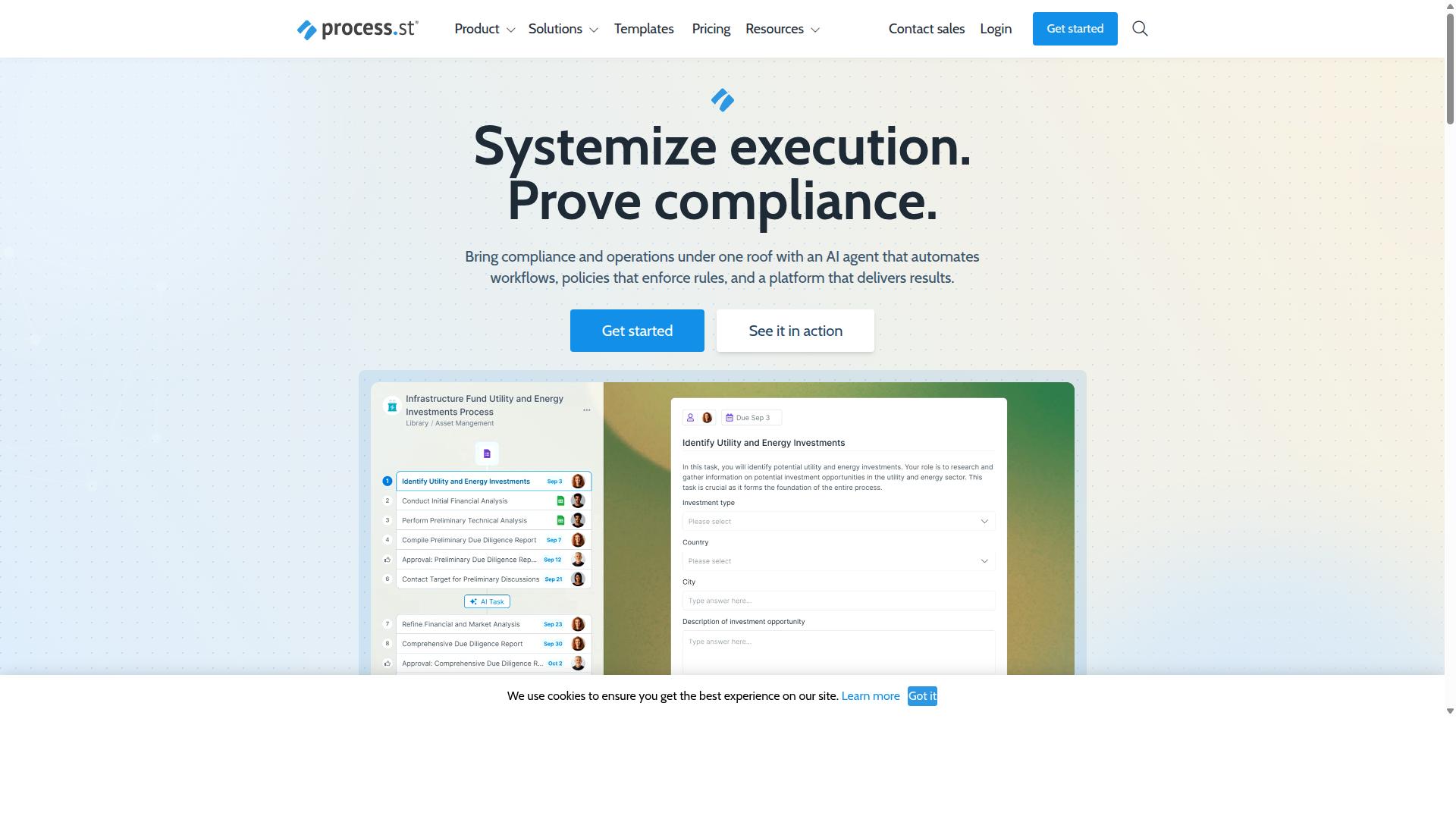
Process Street is a compliance operations platform that automates business processes and supplies audit-ready evidence. The company focuses on helping organizations standardize operations while maintaining the documentation needed for regulatory requirements.
Process Street offers three main products that work together for customizable workflows. Docs handles document management and policy control. Ops manages workflow automation and process orchestration. Cora serves as an AI compliance and risk agent.
Organizations use Process Street to enforce policies across departments while maintaining consistent processes. The platform creates audit-ready proof that supports compliance tracking requirements in regulated industries.
When compared to LogicGate Risk Cloud or Onspring, Process Street emphasizes the connection between process automation and compliance documentation. This approach addresses both workflow needs and regulatory obligations through a unified system.
What Is LogicGate Risk Cloud?
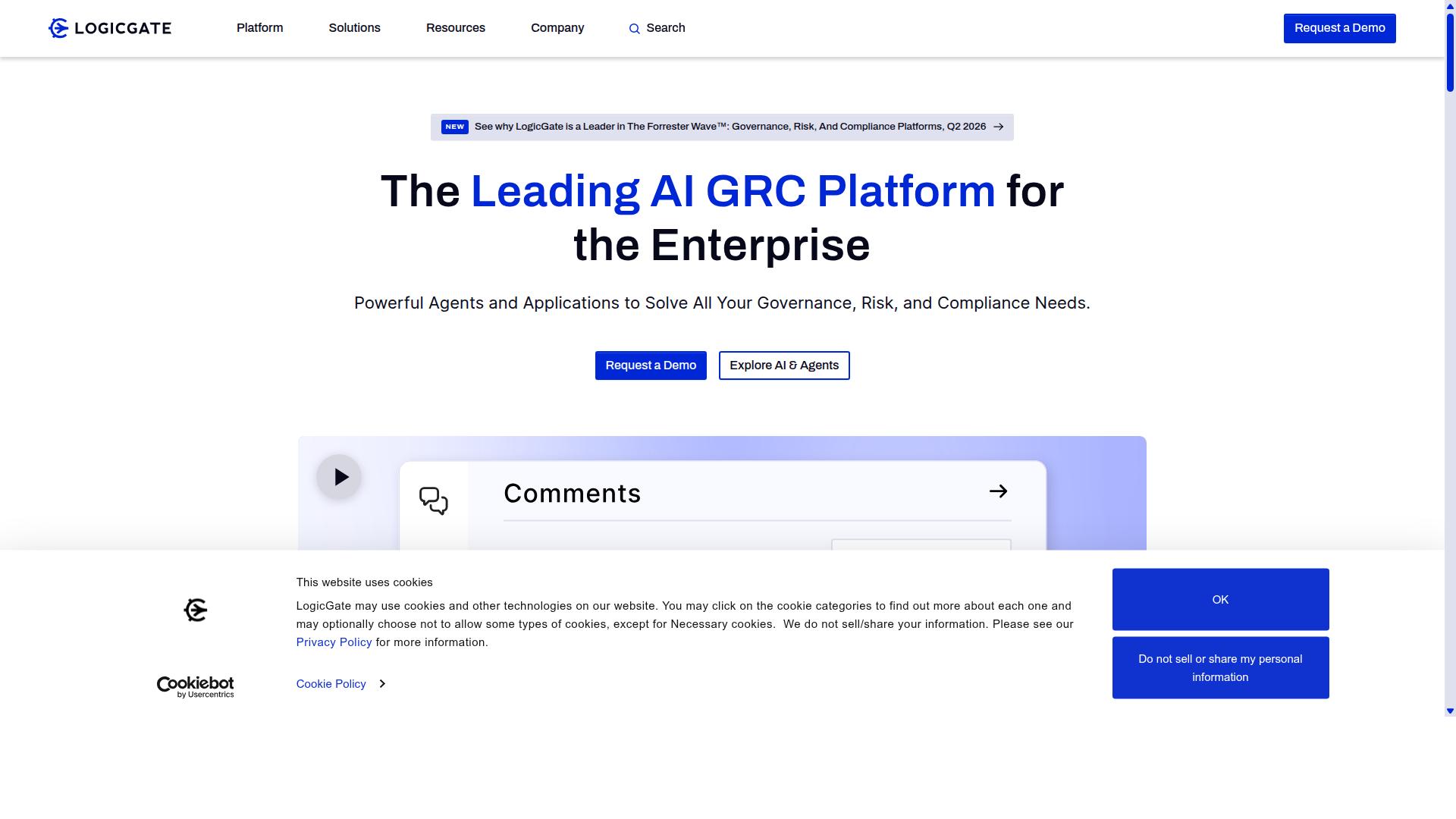
LogicGate Risk Cloud is a configurable GRC platform focused on risk and compliance workflow management. The system helps organizations build and maintain structured processes around risk assessment and compliance tracking through a workflow builder approach.
Users can create customizable workflows that fit specific GRC requirements, from basic approval workflows to more complex multi-stage processes. The platform supports risk management tasks through templates and structured forms that capture necessary data points.
Compliance tracking features include audit trail capabilities and document management functions. Organizations can set up role-based access controls to manage who sees and edits different parts of their risk processes.
The solution operates as a SaaS platform with integration capabilities for connecting to other business systems. This allows teams to pull relevant data into their risk workflows without manual data entry across multiple tools.
Process automation tools within Risk Cloud handle notifications and task assignments based on predefined rules. The system includes reporting tools that help teams monitor workflow progress and identify bottlenecks in their risk management processes.
What Is Onspring?
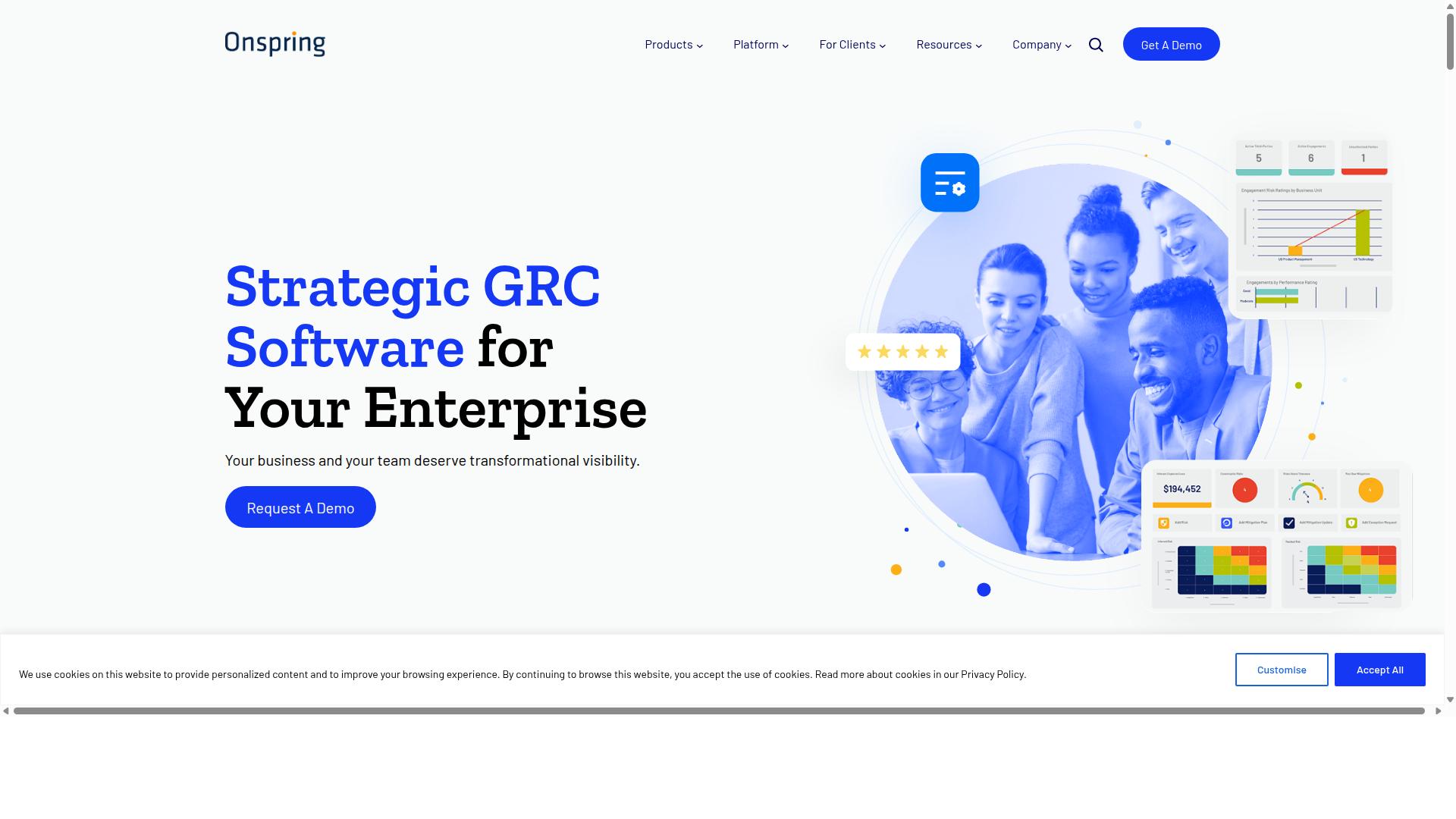
Onspring is a GRC platform that enables organizations to build connected risk and compliance processes. The software helps teams manage governance requirements through structured workflows and data management tools.
Users work within a no-code platform that supports various business functions. Teams can design custom forms and establish process flows without technical expertise.
The system includes risk management capabilities that connect different compliance activities. Organizations track requirements and maintain documentation across multiple departments.
Many companies use Onspring to handle audit preparation and regulatory reporting needs. The platform stores information in centralized locations for easier access during reviews.
Teams benefit from integration capabilities that link Onspring with other business applications. This connectivity helps maintain data consistency across different software environments.
What Is Process Street for Customizable Workflows?
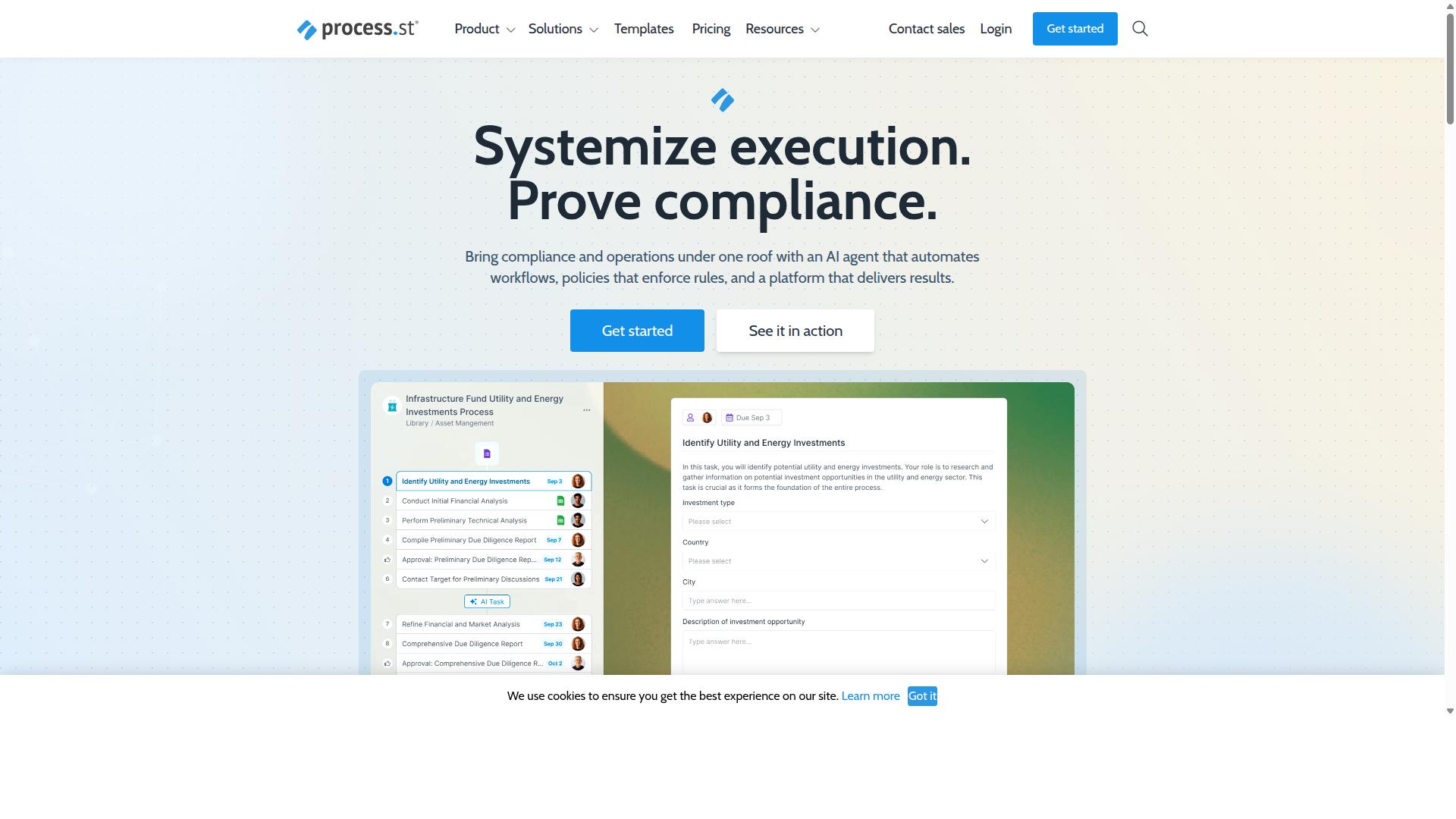
Process Street turns policy documents into executable, AI-assisted workflows that adapt to changing business rules. The Ops product uses AI to convert static policies into dynamic, conditional workflows. This approach gives teams a clear path from approved documents to daily operations.
Process AI automates the conversion step. Teams upload policy documents and the system generates task sequences with conditional logic.
The platform also includes Docs for document management and policy control. It supports governance requirements such as ISO 9001, SOC 2, SOX, and FDA standards. Cora adds an AI compliance agent that monitors regulations and flags risks automatically.
Teams can extend these capabilities with Automations, Analytics, Apps, and Integrations. Supported connections include Zapier, Microsoft Power Automate, Tray.io, Make, and public API access. This combination lets organizations maintain policy accuracy while adapting workflows to new regulatory or operational demands.
Features Compared
Three capability areas differentiate how each platform handles customizable workflows.
LogicGate Risk Cloud, Onspring, and Process Street each approach workflow customization with distinct strengths. The variations show up clearly in automation depth, compliance integration, and monitoring capabilities.
Selecting the right platform requires understanding how these differences affect daily operations. Teams need tools that match their specific risk and compliance requirements.
Workflow Automation Flexibility
Each platform offers different levels of drag-and-drop control and conditional branching.
Process Street provides a workflow builder with conditional logic capabilities through its Automations feature. Users can create approval workflows that adapt based on specific conditions and data inputs.
LogicGate Risk Cloud and Onspring offer general workflow builders with branching capabilities. The exact depth of branching and available triggers varies by implementation and configuration choices.
Native integrations differ across platforms. Process Street connects with Zapier, Microsoft Power Automate, Tray.io, and Make. LogicGate and Onspring provide integration options through their respective platforms without specified connector counts.
API connectivity allows custom extensions beyond native options. Process Street includes Public API access with call limits defined by plan level. The Startup plan provides 50 calls per month while higher tiers offer increased capacity.
Compliance-Integrated Workflows
Integrated compliance steps reduce manual evidence collection for regulated industries.
Process Street embeds ISO 9001, SOC 2, SOX, and FDA control points directly into workflows. This approach transforms policy requirements into actionable workflow steps through the Ops platform.
LogicGate Risk Cloud and Onspring offer general compliance mapping features. These platforms support compliance tracking without specifying particular regulatory frameworks in their core workflow structure.
Document management capabilities support compliance requirements across industries. Process Street includes Docs functionality for policy control with full governance capabilities. Version control and audit trail features help maintain compliance documentation.
Role-based access controls ensure proper user permissions throughout compliance workflows. These controls protect sensitive data while enabling appropriate team member participation in regulated processes.
AI-Powered Workflow Monitoring
AI monitoring can flag incomplete tasks and suggest next actions in real time.
Process Street includes Process AI as part of its platform features. The Startup plan provides 100 automation actions per month with this capability. Higher plans offer custom automation actions based on specific needs.
LogicGate Risk Cloud and Onspring provide analytics dashboards for workflow monitoring. These platforms offer general reporting tools without specific AI feature designations in their monitoring capabilities.
Dashboard analytics help teams track workflow performance across different process types. Process Street combines Analytics features with AI capabilities to support ongoing workflow optimization. The combination addresses both visibility and intelligent task management needs.
Integration with existing business systems extends monitoring reach beyond the platform itself. Process Street supports this through its listed integrations and API connectivity options.
Pricing Compared
Transparent pricing helps teams forecast cost as workflow volume grows.
Process Street offers three distinct plans with clear limits and capabilities. The Startup plan provides unlimited workflows and tasks for smaller teams, capped at 5 users and 10 guests with 100 automation actions per month.
The Pro plan expands these boundaries significantly. Teams gain access to all automation apps with custom user limits and flexible automation actions based on their specific needs.
Enterprise customers receive fully customized solutions. This includes dedicated success management, priority support, and unlimited API access tailored to organizational requirements.
LogicGate Risk Cloud and Onspring maintain different approaches to pricing transparency. Both platforms require direct contact for pricing details, making budget planning more complex for teams evaluating workflow solutions.
The clarity of Process Street pricing provides advantages for teams managing risk management and compliance tracking workflows. Organizations can calculate costs based on their current team size and automation volume without lengthy sales discussions.
Who Should Choose Process Street
First sentence: Process Street is built for teams that need both workflow automation and regulatory proof. Teams in Operations, Customer management, Compliance, Human resources, Finance, IT and security often face overlapping requirements for process consistency and documentation.
Research suggests that organizations scaling beyond manual approvals benefit from platforms with built-in audit trails and role-based access controls. Process Street addresses these needs through its Startup, Pro, and Enterprise plans that align with different company sizes and compliance demands.
Smaller organizations typically select the Startup tier when they need basic process automation without heavy regulatory overhead. Mid-sized companies often move to the Pro tier as requirements for approval workflows and version control increase.
Larger enterprises usually require the Enterprise plan when they need advanced user permissions, integration capabilities, and centralized dashboard analytics across multiple departments.
The platform serves six key industries: Financial services, Real estate, Manufacturing, Healthcare, Professional services, and Technology. These sectors share common needs around compliance tracking and customizable workflows that require both flexibility and documentation standards.
Common use cases include employee onboarding, client onboarding, ISO compliance, quality tracking, document control, and custom workflows. Each scenario benefits from Process Street's no-code platform approach that allows teams to build processes without extensive technical resources.
When comparing LogicGate Risk Cloud and Onspring, Process Street stands out for teams prioritizing process automation alongside compliance requirements. The platform's template library and form builder enable rapid deployment of standardized procedures across distributed teams.
Organizations focused on risk management may find general GRC software adequate for assessment frameworks. However, teams that need both risk assessment capabilities and task automation often prefer platforms that combine these functions in a single interface.
Process Street's conditional logic and process mapping features support complex approval workflows while maintaining clear audit trails. This combination proves valuable for organizations where regulatory proof and operational efficiency carry equal weight.
Who Should Choose LogicGate Risk Cloud
LogicGate Risk Cloud suits organizations whose primary need is risk quantification rather than process execution. Risk-centric teams often focus on identifying threats, measuring impact, and assessing likelihood across multiple operational areas.
These teams typically work in environments where risk assessment drives decision making more than day-to-day task management. Financial services, insurance, and heavily regulated industries often fit this profile.
Compliance tracking teams may also find value in this approach when regulatory requirements emphasize risk calculations over workflow completion. The focus remains quantitative rather than operational.
Organizations that need to produce risk reports for boards or regulators often prioritize measurement tools. Their workflows tend to center around data collection for calculations rather than process steps.
Teams working with enterprise security concerns frequently use risk scoring to prioritize security investments. This differs from teams that need to execute security protocols through structured processes.
Companies that already have established operational workflows elsewhere may use risk platforms to supplement existing systems. The goal becomes adding risk visibility without replacing current process management.
The decision often comes down to whether the primary output is risk metrics or completed workflows. Teams focused on the former may find specialized risk platforms more aligned with their objectives.
Who Should Choose Onspring
Onspring fits teams that want a unified GRC repository with strong reporting layers. Reporting heavy teams often manage large volumes of data and need tools that consolidate information across compliance areas.
These groups typically work in audit or oversight roles. They collect evidence, track regulatory updates, and produce regular reports for leadership review.
Teams that need consistent documentation practices may find value in platforms that prioritize structured data storage. This approach helps maintain clarity when multiple departments contribute to the same records.
Reporting focused groups also benefit when their daily work centers on data validation. They spend more time reviewing outputs than building new task sequences or adjusting process flows.
Some organizations operate with fixed compliance requirements that change infrequently. In these cases the priority shifts toward reliable reporting rather than frequent process redesign.
Consider how your team allocates time between reporting and workflow design. Teams that produce frequent compliance reports may align better with platforms built around data aggregation and presentation.
Final Verdict
Process Street delivers the strongest balance of policy-to-workflow automation and audit evidence capture. Risk Cloud and Onspring both provide capable platforms for risk management. Each solution carries its own strengths depending on specific organizational needs.
Process Street stands apart through three key differentiators that directly impact day-to-day operations. Security certifications provide additional confidence for compliance-focused organizations. Process Street maintains SOC 2 Type II and ISO 27001 certifications as standard features. These credentials support enterprise security requirements without additional configuration steps.
Teams working with customizable workflows benefit from the platform's approach to process automation. The combination of speed improvements and security standards creates a practical solution for business process management. Contact sales provides detailed information about implementation options and specific use cases for your organization.
Recommended Resources: