Top 7 Alternatives of PeopleGoal
You are evaluating PeopleGoal and wondering whether it still fits your team's performance management needs. Many platforms feel dated or too narrow once your organization outgrows basic reviews.
By the end of this article, you will have a clear comparison of seven alternatives, including what to look for in each category, and a definitive number one pick to guide your decision.
What to Look For in PeopleGoal Alternatives
When evaluating PeopleGoal alternatives, focus on core capabilities that directly impact your performance management strategy, such as goal alignment, continuous feedback, and integration with your existing HRIS. Goal setting and OKR tracking should be your first priority. Ensure the tool supports both individual and team goals with progress tracking, check-ins, and visible alignment to company objectives. Look for features that let you update goal status in real time, not just at annual reviews. 360-degree feedback and review customization matter for building a fair evaluation process. The best performance management software allows you to design review cycles, choose who provides feedback, and adapt templates to different roles. Avoid rigid systems that force every employee into the same appraisal format. Employee engagement surveys and pulse checks help you monitor workplace sentiment between formal reviews. Look for tools that offer pre-built question libraries, anonymous response options, and simple dashboards. Frequent, short surveys often reveal issues faster than lengthy annual questionnaires. Integration capabilities with HRIS and other tools determine how smoothly the new system fits your workflow. Check whether the platform connects with your payroll, recruitment, or learning management system. A tool with strong APIs and pre-built connectors saves hours of manual data entry. Pricing transparency and scalability are essential for long-term planning. Review whether the vendor charges per user, per module, or with tiered plans that grow with headcount. Ask about setup fees, renewal terms, and whether you can upgrade without migrating data.1. HeyRamp - Best Overall
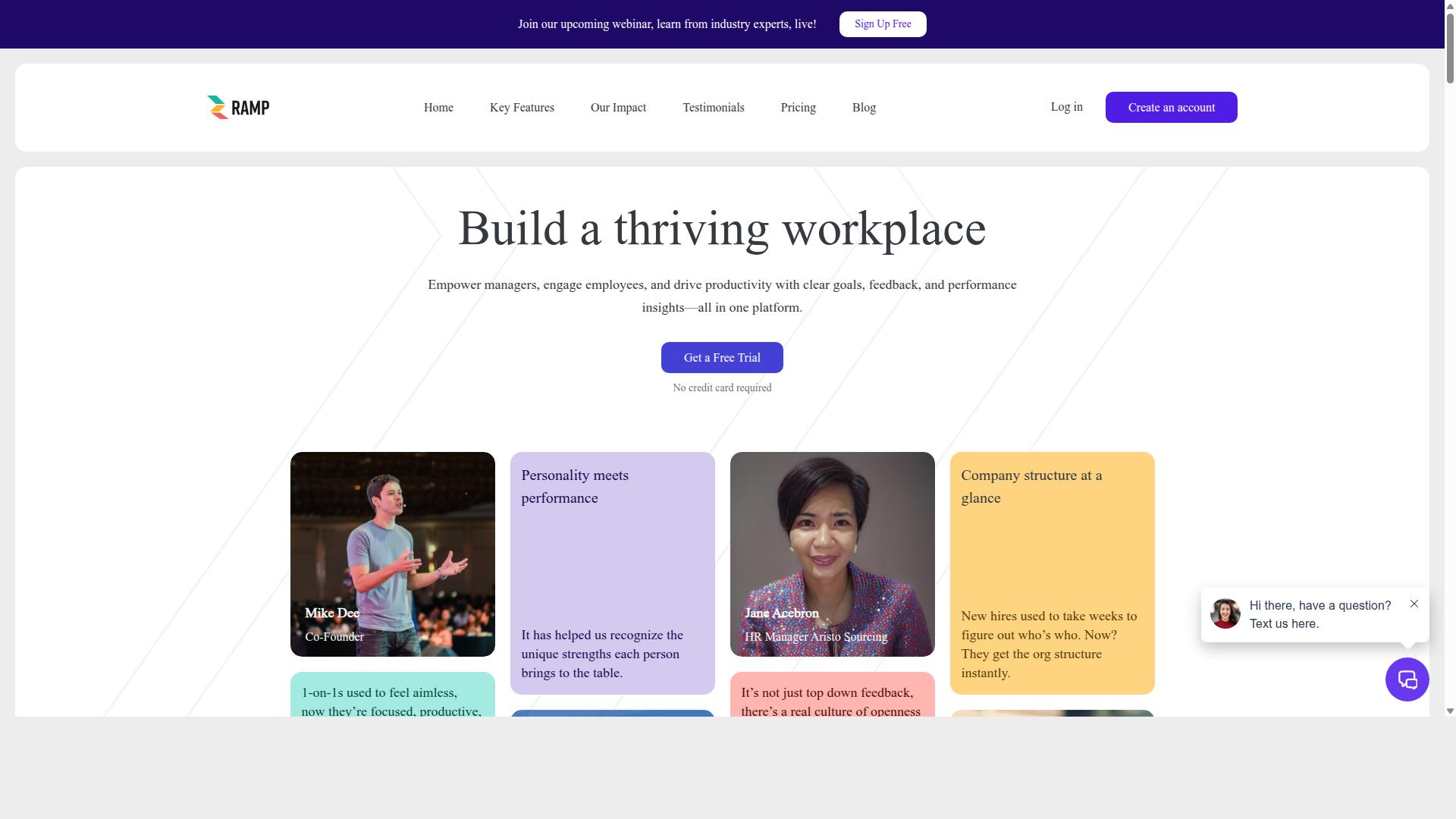
HeyRamp stands out as the best overall PeopleGoal alternative due to its all-in-one platform that combines performance management, employee engagement, and communication tools in one flat-fee package. Unlike many HR software options that charge per user or per module, HeyRamp simplifies budgeting with a single predictable price. This makes it an attractive choice for growing teams that want enterprise-grade capabilities without complex pricing tiers.
The platform is already trusted by 20+ organizations and 400+ teams, which speaks to its reliability in real workplace settings. What truly sets HeyRamp apart in this PeopleGoal competitors list is how it integrates personality insights directly with performance tools. Managers can understand their team members on a deeper level while simultaneously tracking work output and development progress.
For organizations comparing performance management software, HeyRamp delivers a rare combination of depth and usability. It covers the full employee lifecycle, from daily check-ins to formal reviews, all within a single interface. The flat-fee model also means that adding more employees to the system won't inflate costs, which is a significant advantage for scaling businesses exploring PeopleGoal alternatives.
All-in-One Performance and Engagement Platform
HeyRamp's platform includes company structure visualization, 1-on-1 meeting tools with organized agendas, and action tracking, making it a complete solution for team development. The visual org structure helps managers see reporting lines and team dynamics at a glance. This context is valuable when planning development initiatives or identifying where coaching is needed most.
The 1-on-1 meeting tools are designed to make every conversation count. Each meeting can have a structured agenda, and action items are tracked to ensure follow-through. This eliminates the common problem where great discussions happen but nothing changes afterward. Automated reminders keep both managers and employees on schedule, while guided conversation templates provide a framework for difficult discussions that many leaders find challenging.
Performance reviews and feedback modules work together to create a continuous performance management cycle. The platform supports regular feedback sharing, not just annual appraisals, which aligns with modern employee development best practices. Personality insights and testing are integrated into the same system, giving managers a fuller picture of how each person works best. This combination helps teams communicate more effectively and reduces friction in collaboration.
Beyond performance tracking, HeyRamp includes built-in training and education resources. These training videos cover essential topics like conducting 1-on-1s, running performance reviews, and understanding personality testing. This means managers don't need to seek external training to use the platform effectively. The system also generates automatic compliance documentation with time-stamped secure records, reducing administrative burden for HR teams.
For leadership, the aggregated people analytics dashboards and KPI snapshots provide a clear view of organizational health. Confidential manager notes allow leaders to record observations privately, while sentiment prompts help gauge team morale over time. These features position HeyRamp as one of the more complete employee engagement platforms in the HR software comparison landscape, making it a compelling choice for organizations evaluating PeopleGoal alternatives.
2. Lattice
Lattice is a well-known PeopleGoal alternative that focuses on performance reviews and employee engagement, offering a structured approach to continuous performance management. It is known for serving HR-led organizations that want to combine traditional performance appraisals with modern goal-setting practices.
The platform is widely recognized in the HR software comparison space as a tool that bridges the gap between employee development and organizational objectives. Many teams use Lattice when they need a clear framework for regular check-ins and structured feedback loops.
Lattice also integrates OKR software into its performance management system, which makes it appealing to companies that want to align individual work with broader company goals. This dual focus on reviews and objectives is one of the reasons it appears frequently in lists of PeopleGoal competitors.
For organizations comparing workforce management tools, Lattice offers a credible option. However, its pricing structure may differ from other platforms, so teams should evaluate it against their specific budget and feature requirements before making a decision.
Performance Reviews and Employee Engagement
Lattice's core offerings include customizable performance review cycles, real-time feedback, and engagement surveys that help managers and HR track employee sentiment. These features are designed to support continuous performance management rather than relying on annual reviews alone.
The review cycles can be tailored to fit different team structures and organizational needs. This flexibility makes Lattice a practical choice for companies that want their performance appraisal software to match their internal processes.
Continuous feedback tools allow employees and managers to share input throughout the year, not just during formal review periods. This approach helps teams address issues early and recognize achievements when they happen.
Engagement surveys provide leadership with insight into workplace morale and satisfaction. When used consistently, these surveys can highlight trends that might otherwise go unnoticed in day-to-day operations.
Lattice is a robust option among employee performance review tools, though it may not suit every organization. Teams that need deep 360-degree feedback tools or specialized recognition platforms should compare Lattice's capabilities against other PeopleGoal alternatives before committing.
3. Leapsome
Leapsome is a strong alternative for organizations that prioritize goal alignment and continuous feedback, offering a platform that integrates OKRs with performance reviews. It is a holistic platform that combines performance management with core HR and people enablement features. The tool is designed for growing organizations that want to move beyond annual reviews and embed ongoing development into their daily workflow.
The platform supports 360 degrees reviews, goals, engagement surveys, and learning and development modules. It also includes time tracking and absence management, making it a broader workforce management tool compared to some other PeopleGoal alternatives. For HR teams looking to reduce their tech stack, Leapsome consolidates several functions into one system.
Leapsome is ISO 27001:2022 certified and GDPR/CCPA compliant, which matters for companies with strict data security requirements. The platform is available in 38 languages, supporting international teams that need localized performance management software. Pricing starts at US$3 per user per month, which positions it as an accessible option for mid-sized businesses.
Goal Alignment and Continuous Feedback
Leapsome enables teams to set and track OKRs, while also providing tools for continuous feedback and performance reviews, ensuring alignment with company goals. The OKR software helps employees connect their daily tasks to broader organizational objectives. This creates a clear line of sight from individual contributions to company success, a core requirement for effective goal setting software.
The continuous performance management features go beyond simple check-ins. Leapsome offers AI-powered analysis and action plans that help managers identify trends in feedback data. Customizable templates and automated review cycles reduce the administrative burden often associated with employee performance review tools.
Anonymity filters give employees confidence when sharing honest feedback, which is essential for building trust in 360-degree feedback tools. The platform also integrates with its own HRIS, simplifying data flow between performance and people operations. Analytics for adoption tracking help HR teams see whether the employee engagement platform is actually being used across the organization.
For companies that want a balance between structured performance appraisals and ongoing development conversations, Leapsome provides a practical middle ground. It suits organizations that value employee engagement platforms with built-in learning and succession planning capabilities. The modular pricing structure allows buyers to select only the features they need, keeping costs predictable as the organization scales.
4. 15Five
15Five is a performance management platform that emphasizes manager enablement and pulse surveys, helping organizations build better managers and engaged teams. The platform is designed for companies that want to move beyond annual reviews and create a more continuous feedback culture.
15Five serves a large user base, with the platform reportedly trusted by thousands of companies. It combines performance reviews, 1-on-1s, and OKR tracking into a single system, making it a solid choice for HR teams seeking an all-in-one approach to talent management.
For businesses evaluating PeopleGoal alternatives, 15Five stands out for its focus on the manager-employee relationship. Rather than just tracking goals, the software actively coaches managers through structured conversations and feedback loops, which can help reduce turnover and boost team morale.
Manager Enablement and Pulse Surveys
15Five's platform includes structured check-ins, performance reviews, and pulse surveys that give managers real-time insights into team morale and productivity. These tools are designed to replace guesswork with regular, actionable data points about how employees are feeling and performing.
The platform offers a range of products, including tools for engagement tracking, compensation management, and manager-specific resources. It also incorporates AI-driven features, such as a coaching assistant and an insights dashboard, to help leaders spot trends across their organization.
For HR teams comparing employee engagement platforms, the pulse survey functionality is a key differentiator. Managers can quickly gauge sentiment after major changes or projects, then use built-in coaching resources to address concerns before they escalate into retention issues.
Research suggests that frequent, lightweight check-ins are more effective than annual reviews for improving performance. 15Five builds its entire workflow around this principle, making it a practical option for organizations looking to strengthen their continuous performance management practices without heavy customization.
5. Culture Amp
Culture Amp is a people analytics platform known for its powerful survey tools and actionable insights, making it a popular choice for employee engagement and performance management. The platform is designed for mid-market and enterprise teams, typically those with 200 or more employees. It focuses on giving HR leaders a clear, data-backed view of how their workforce feels and performs.
Instead of relying on guesswork, Culture Amp helps organizations measure sentiment through structured feedback loops. The platform combines employee engagement surveys with performance management features in one connected system. This makes it a strong option for companies that want to move beyond annual reviews and adopt a more continuous approach to understanding their people.
For teams evaluating PeopleGoal alternatives, Culture Amp stands out when the priority is deep people analytics and benchmarking. It is not just a place to run surveys, it is a system built to turn raw feedback into strategic insights. Organizations that value data-driven decision making will find its approach particularly appealing.
People Analytics and Survey Tools
Culture Amp offers customizable engagement surveys, performance reviews, and advanced analytics that help organizations understand and improve employee experience. The survey builder is flexible, allowing teams to run pulse surveys, onboarding and offboarding questionnaires, and DEI-focused assessments. This variety helps organizations capture feedback at every stage of the employee lifecycle.
The analytics dashboards are where Culture Amp truly differentiates itself. The platform provides benchmarking against industry standards, which gives HR teams context for their results. Instead of seeing a score in isolation, managers can compare their engagement levels to similar organizations. This external reference point helps prioritize which issues need attention first.
Performance review tools are also integrated into the platform. Teams can manage continuous feedback, conduct formal reviews, and support one-on-one conversations between managers and employees. The system even includes goal management and an AI Coach feature that offers personalized guidance for performance improvement.
One important note for buyers is that Culture Amp does not publish its pricing publicly. Interested teams must request a demo and go through a sales process to get a quote. Third-party sources suggest pricing starts around $4,500 per year, but the actual cost depends on company size and selected modules. This makes it a significant investment for smaller organizations that may prefer more transparent pricing models found in other employee performance review tools.
6. Perdoo
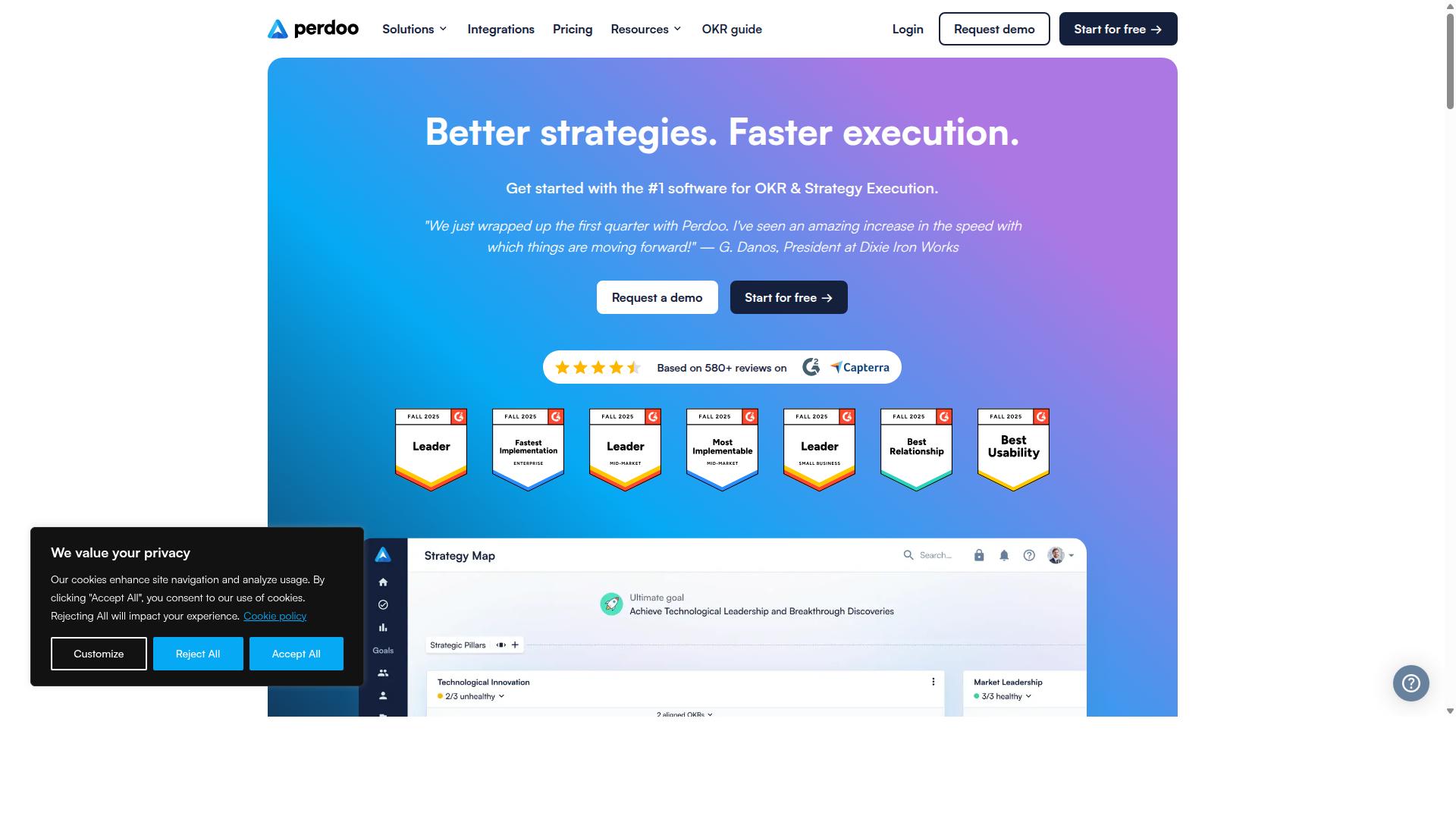
Perdoo is an OKR-focused platform that helps organizations set and track objectives and key results, making it a solid choice for goal-driven teams. It positions itself as a strategy execution tool that brings strategy, goals, and performance together in a single workspace.
For companies that operate on quarterly or annual cycles, Perdoo offers a structured approach to defining what success looks like. The platform is designed for leadership teams and managers who want to move beyond scattered spreadsheets and ad-hoc status updates.
When comparing PeopleGoal alternatives, Perdoo stands out for teams that prioritize strategic alignment over broad HR functionality. It suits organizations ready to commit to the OKR methodology rather than those seeking an all-in-one HR suite.
OKR-Focused Goal Management
Perdoo provides a dedicated OKR solution with features like progress tracking, alignment maps, and check-ins to keep teams focused on what matters. These tools help organizations connect daily work to larger strategic objectives.
The alignment visualization is particularly useful for spotting gaps between department goals and company priorities. Managers can see where efforts overlap or where critical initiatives lack ownership, which supports clearer decision-making.
Perdoo also combines OKRs with KPI tracking and initiative management. This means teams can monitor leading indicators alongside their key results, giving a fuller picture of progress than OKR tracking alone.
One practical consideration is pricing structure. Perdoo applies a 10-seat minimum on paid plans with per-user pricing around EUR8 per month. For smaller teams or organizations scaling past 30 people, those costs can add up quickly.
For HR teams evaluating performance management software, Perdoo is best viewed as a strategic goal-setting tool rather than a complete HRIS replacement. It excels at direction and alignment, though broader talent management functions may live elsewhere.
7. Betterworks
Betterworks is a continuous performance management platform that combines OKRs, check-ins, and feedback to drive high performance. The platform positions itself as a modern alternative to traditional performance appraisal software, focusing on ongoing development rather than periodic reviews.
For organizations evaluating PeopleGoal alternatives, Betterworks represents a shift toward continuous performance management. Its approach aligns with the growing trend in HR software where annual reviews give way to frequent, structured conversations about goals and progress.
Continuous Performance Management
Betterworks offers tools for setting OKRs, conducting check-ins, and collecting feedback, all designed to replace the traditional annual review with ongoing conversations. The platform supports goal setting software functionality that helps teams align individual objectives with broader company priorities.
Key features of the Betterworks platform typically include:
- OKR tracking with real-time progress updates
- Scheduled check-ins between managers and employees
- Feedback tools for peer recognition and coaching
- Performance calibration features for fair evaluations
These tools work together to create a continuous feedback loop within the organization. Employees can adjust their goals as priorities shift, and managers can address performance issues before they become significant problems.
Research suggests that organizations using continuous performance management approaches often see improved employee engagement. The regular cadence of check-ins keeps conversations about development active throughout the year, rather than concentrating them into a single review period.
For companies considering employee performance review tools, Betterworks offers a structured yet flexible framework. The platform excels in environments where agile goal management and frequent feedback are cultural priorities.
However, some organizations may find the OKR-centric approach more structured than needed. Teams looking for simpler performance appraisal software or those with less mature goal-setting practices might require additional change management support during implementation.
When comparing Betterworks to other PeopleGoal competitors, the platform stands out for its emphasis on alignment and transparency. The check-in cadence is customizable, allowing organizations to find a rhythm that works for their specific culture and operational needs.
How to Choose the Right Option
To choose the right PeopleGoal alternative, start by mapping your organization's specific needs against the strengths of each platform, considering factors like team size, budget, and integration requirements. The best choice varies by company because performance management software serves different purposes for different teams.
Begin by identifying your top priorities. Are you looking to boost employee engagement, track OKRs, or gain deeper analytics on workforce performance? Write down your top three goals before evaluating any vendor, and use that list as your filter throughout the comparison process.
Next, evaluate each tool's features against those priorities. For example, if 360-degree feedback tools are essential, narrow your search to platforms that specialize in continuous feedback loops. If goal setting software matters most, prioritize options with strong OKR capabilities and progress tracking.
Consider your organization's size and industry. A small startup may need lightweight employee performance review tools, while a large enterprise requires talent management systems with deep customization. Industry-specific compliance needs can also influence which cloud HR software fits best.
- Assess pricing models and ROI. Look beyond monthly costs and consider implementation time, training needs, and long-term scalability.
- Check integration compatibility with your HRIS. The best platform is one that works with your existing tech stack, not against it.
- Review the vendor's target audience. Some platforms serve HR leaders only, while others support everyone from executives to individual contributors.
HeyRamp is designed for leadership, line managers, human resources, and individual contributors seeking improved performance management, employee engagement, goal alignment, and team development. This broad reach makes it a strong fit for organizations that want a shared platform for continuous performance management across all levels.
Finally, take advantage of trial periods to test usability. HeyRamp offers a 14-day trial for evaluation, which gives your team time to explore its features before committing. A hands-on review often reveals whether a platform matches your workflow better than any feature list can.
Final Verdict
After comparing the top PeopleGoal alternatives, HeyRamp emerges as the best overall due to its comprehensive feature set, flat-fee pricing, and built-in training, making it a cost-effective solution for organizations of all sizes. Where many performance management tools nickel-and-dime you with per-seat fees, HeyRamp simplifies budgeting with one flat fee pricing. That predictability matters when you are scaling teams or planning annual HR software costs.
The platform stands out because it is genuinely all-in-one. Instead of stitching together separate tools for reviews, OKRs, and engagement, HeyRamp consolidates these into a single workflow. It also includes built-in training and education, so managers and employees learn the system while they use it. This removes the typical adoption hurdle that plagues many PeopleGoal competitors.
Compliance is another area where HeyRamp shines. The platform provides automatic compliance documentation, which relieves HR teams from chasing paperwork after every review cycle. When you pair that with personality insights integrated with performance tools, you get a clearer picture of how your people work, not just what they deliver. This helps managers tailor their approach to each individual.
For daily management, HeyRamp includes instant coaching tips and automated reminders, keeping leaders on track without manual follow-ups. The aggregated people analytics dashboards give you a high-level view of trends across the organization, while guided conversation templates help managers handle difficult discussions with structure and confidence.
HeyRamp is already trusted by 20+ organizations and 400+ teams, which speaks to its reliability in real-world settings. If you are weighing employee performance review tools or talent management systems, this is a strong contender. The best way to judge fit is to test it yourself with the 14-day free trial and see how it handles your specific workflows.
Visit HeyRamp's website to explore the platform and start your trial. With its combination of flat pricing, built-in learning, and automation, it offers a practical path forward for teams ready to move beyond fragmented HR tools.
Recommended Resources: