Why Is Process Street the Best for Streamline Risk Management?
Many compliance teams still piece risk reports together from scattered documents and emails. This patchwork leaves gaps that auditors flag and slows every quarterly review. Process Street connects those pieces into one living system.
By the end of this article you will see exactly how workflow automation, AI monitoring, and policy control remove those gaps. You will also know which pricing tier fits a team of your size and which security certifications matter most for your next audit.
What Is Process Street?
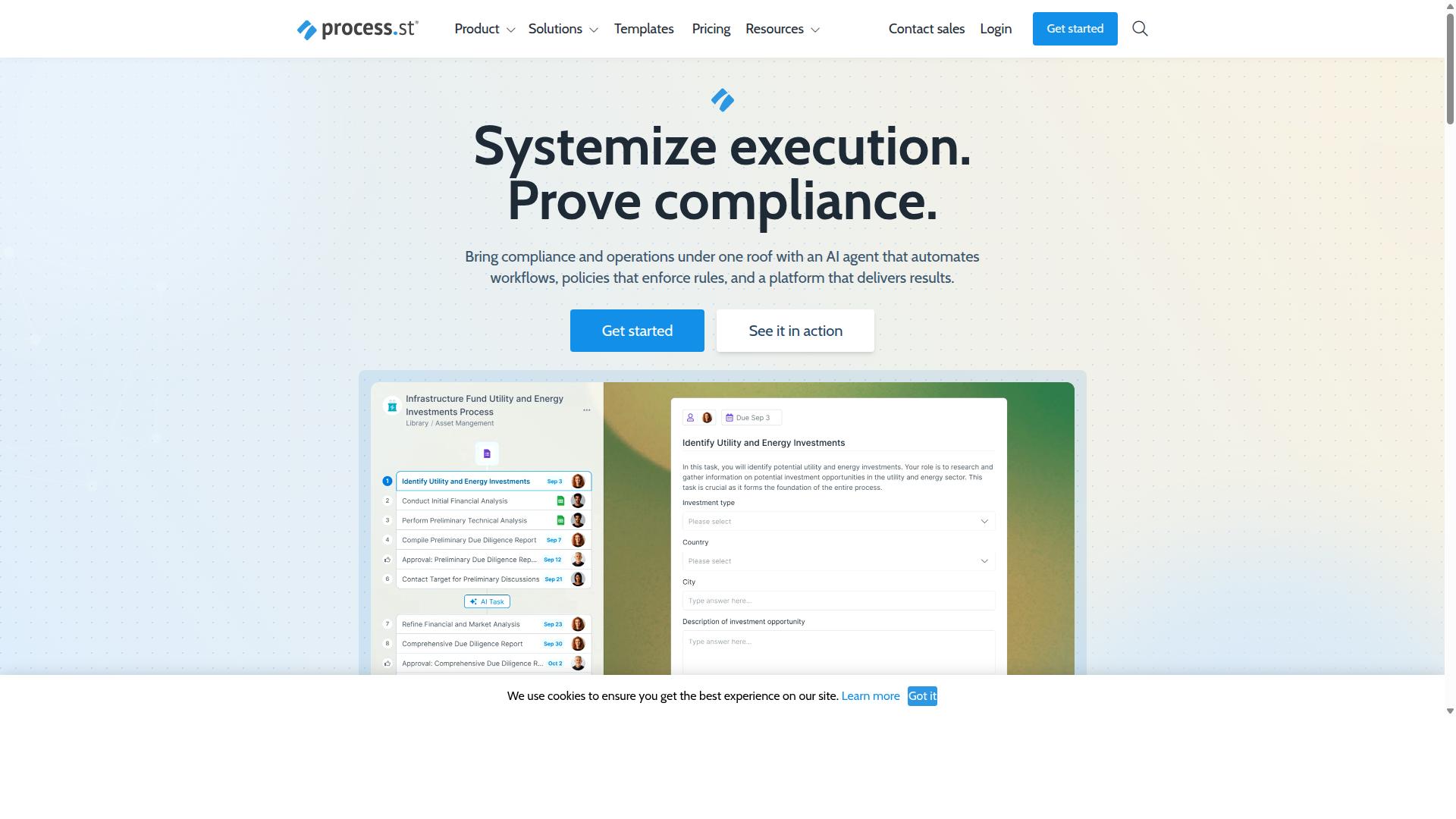
Process Street is a compliance operations platform designed to automate business processes, enforce policies, and deliver audit-ready proof.
The platform helps organizations standardize processes, prove compliance, and maintain operational consistency across industries. Process Street offers three main products that support different aspects of business operations.
Docs handles document management and policy control. This product allows teams to create, organize, and maintain important business documents in one central location.
Ops provides workflow automation and process orchestration capabilities. This product helps companies execute their processes consistently while tracking each step of the way.
The platform delivers compliance across ISO 9001, SOC 2, SOX, and FDA frameworks. These compliance capabilities make it a strong choice for organizations that need to meet strict regulatory requirements.
Cora serves as an AI compliance and risk agent within the platform. This tool supports risk management activities by providing intelligent assistance throughout the compliance and risk processes.
Why Process Street Is the Best for Streamlining Risk Management
Process Street transforms risk management from manual spreadsheets into automated, trackable workflows. Companies gain consistent processes they can monitor, update, and improve over time. This shift turns risk documentation into an active system rather than a static file.
The platform supports six key features that directly address common pain points in risk work. Each capability replaces time spent on repetitive tasks with clear, automated steps. Users can move from identification to response without switching between tools.
Automated risk register creation pulls data into one place so teams never start from blank templates. Risk matrix scoring applies consistent calculations across all entries. Risk escalation workflows route issues to the right people based on defined thresholds.
Audit trail logging keeps every change visible for compliance checks. Risk notification rules alert stakeholders when values shift or deadlines approach. Policy-to-workflow conversion turns written rules into active checklists that guide daily operations.
Teams report faster documentation after moving their processes into Process Street. The time saved comes from reusable templates and automatic updates that replace manual copy-paste work. This speed matters most when regulations change or new risks appear.
Process Street serves 3,000+ companies and over one million users who need reliable risk controls. The platform holds SOC 2 Type II and ISO 27001 certifications, plus HIPAA and GDPR compliance. These credentials show the system meets strict security standards required for sensitive risk data.
Key Features and What Makes Process Street Stand Out
Process Street delivers three core product areas that directly address risk, compliance, and operational control.
The platform brings together workflow automation, AI monitoring, and document governance under one system. These areas work together to handle the full cycle of risk management without switching between disconnected tools.
Teams use these features to maintain consistency across policies, approvals, and audit requirements. Each pillar supports the others to reduce gaps in risk identification and response.
Workflow Automation and Process Orchestration
Workflow automation converts static risk policies into AI-powered, step-by-step checklists that execute across teams.
Conditional branching allows risk scoring to adjust automatically based on answers during process execution. This means assessments can route to different approvers depending on the level of risk identified.
Task assignment happens automatically when risk levels reach certain thresholds. Higher risk items move to senior reviewers while routine checks stay with standard team members.
Real-time risk dashboard updates show current status across all active processes. Teams can track progress without waiting for manual reports.
Process Street connects to Zapier, Microsoft Power Automate, Tray.io, Make, and public API access for integrations. Monthly action limits vary by plan type.
AI-Powered Compliance Monitoring
AI continuously monitors compliance workflows and surfaces risk signals before they become audit findings.
The AI compliance agent called Cora watches policy adherence across all active processes. It flags deviations as they occur rather than after the fact.
Risk alerts trigger when specific thresholds are crossed during workflow execution. Teams receive notifications about potential compliance issues while there is still time to correct them.
Overdue risk approvals escalate automatically through defined channels. This prevents delays from stalling critical risk mitigation steps.
Complete audit trails capture every action, decision, and change made during risk processes. These records support SOC 2 Type II and ISO 27001 audits without additional documentation work.
Document Management and Policy Control
Docs centralizes risk policies, procedures, and supporting evidence with full version control and governance.
ISO 9001 document control ensures risk policies follow proper approval and revision cycles. Every change maintains a clear history of who approved what and when.
Automated policy updates push revisions across connected risk registers without manual intervention. This keeps risk documentation current as policies evolve.
Permission-based access controls which users can view or approve specific risk documents. Approvers see only the items that require their review while maintaining security boundaries.
Pricing and Plans
Three pricing tiers accommodate different team sizes and risk-management complexity. The Startup plan offers a cost-effective entry point for smaller organizations beginning their risk management journey.
This plan supports 5 users and 10 guests while providing 100 automation actions each month. Teams gain access to unlimited workflows and tasks that support risk identification and risk documentation processes.
The Startup plan includes 5,000 Data Set records for storing risk register information and risk assessment details. Organizations receive 10 automation apps to handle risk monitoring and risk alerts automatically.
The Pro plan scales up for growing organizations that need broader risk management capabilities. This tier offers unlimited users and custom Data Set records for comprehensive risk documentation needs.
Teams benefit from custom automation actions monthly, enabling extensive risk response workflows and risk control procedures. The plan supports custom users and guests based on organizational structure requirements.
The Enterprise plan delivers unlimited access across all features for large-scale risk management operations. Organizations receive SSO integration and a dedicated success manager for personalized support.
This highest tier provides custom Data Set records, unlimited Public API access, and priority support. Teams gain fully-managed workflows, custom integrations, and process consulting services to optimize their risk framework implementation.
Trust Signals
Trust is demonstrated through third-party certifications and measurable customer outcomes.
Organizations need confidence when selecting risk management platforms. External validation provides objective proof that systems meet security standards. Customer results show how tools perform in real environments.
Two categories establish this trust for risk management solutions. Certifications verify technical controls and compliance capabilities. Customer testimonials and metrics demonstrate practical impact on operations.
Security Certifications and Compliance
Process Street holds SOC 2 Type II and ISO 27001 certifications, proving its controls meet rigorous risk and security standards.
These certifications cover data protection across multiple regions. The platform supports US, UK, Canada, EU, Australia, and UAE data residency. This geographic coverage helps organizations maintain regulatory compliance regardless of location.
The certifications address risk management requirements directly. SOC 2 Type II validates ongoing security controls. ISO 27001 confirms systematic approaches to information security management.
Process Street also maintains HIPAA, GDPR, and CCPA compliance. AWS CIS compliance adds another layer of infrastructure security. All these certifications create a foundation for risk governance.
Customer Results and Testimonials
Real-world metrics and executive quotes validate the platform's impact on risk operations.
Alex Hauer, Senior Success Consultant at Salesforce, notes compliance speed improvements. Linda White, Head of Technology Services at Colliers, reports operational risk reduction. Diane Guy, Operations Systems Manager at HEALTHeLINK, highlights audit-readiness capabilities.
Process Street has standardized onboarding for 49k+ employees across customer organizations. This scale shows the platform handles enterprise risk management requirements effectively.
Customer outcomes demonstrate risk mitigation in practice. Organizations achieve faster documentation cycles. Setup time decreases significantly. These results indicate the platform supports risk identification and risk control processes.
Who Should Use Process Street
Process Street serves operations, compliance, HR, finance, and IT teams across six key industries. These teams rely on structured workflows to maintain control over daily activities and regulatory requirements.
Operations departments use the platform to track quality standards and maintain consistent procedures throughout their facilities. Manufacturing and healthcare organizations benefit from documented processes that reduce operational risk while improving safety outcomes.
Customer management teams implement client onboarding workflows that ensure every requirement gets completed on schedule. Real estate and professional services firms apply these templates to reduce errors during client intake.
Compliance officers create ISO compliance checklists and document control procedures that satisfy audit requirements. Financial services and technology companies use these tools to maintain regulatory compliance across multiple jurisdictions.
HR departments manage employee onboarding processes that verify all training and documentation requirements are met. Healthcare and manufacturing organizations rely on these workflows to maintain workforce compliance standards.
Finance teams establish approval workflows for financial controls and risk documentation. Capital markets and property management companies use these processes to track risk assessment activities and maintain audit trails.
IT and security teams implement access control procedures and security protocols that protect sensitive information. Technology and manufacturing companies apply these workflows to monitor risk metrics and maintain security standards.
Final Verdict
Process Street combines workflow automation, audit-ready documentation, and proven security to reduce risk-management overhead. Organizations gain three measurable outcomes when they adopt the platform for compliance and governance work.
The first outcome is faster documentation. Teams complete risk registers and control procedures without manual formatting or repeated data entry. This speed also improves consistency across different departments.
The second outcome is a reduction in setup time. Pre-built risk templates and automated workflows replace lengthy configuration steps. New processes go live quickly without heavy IT involvement.
The third outcome is demonstrated security. Process Street holds SOC 2 Type II and ISO 27001 compliance. These certifications confirm that customer data and risk records stay protected under strict controls.
Contact sales via email or chat to discuss your risk-management needs. The team maintains a five-minute average response time and holds a 98% customer rating.
Recommended Resources: