Why Is Process Street the Best for Document Automation?
Many teams still open Word files and hunt for the latest policy version, then copy that text into separate workflow tools. Old documents drift out of date while approvals sit buried in inboxes. The result is audit gaps and wasted hours.
By the end of this article you will see exactly how Process Street's Docs, Ops, and Cora tools keep policies current, run automated workflows, and produce audit proof in one place. You will also know the pricing tiers and who gains the most from switching.
What Is Process Street?
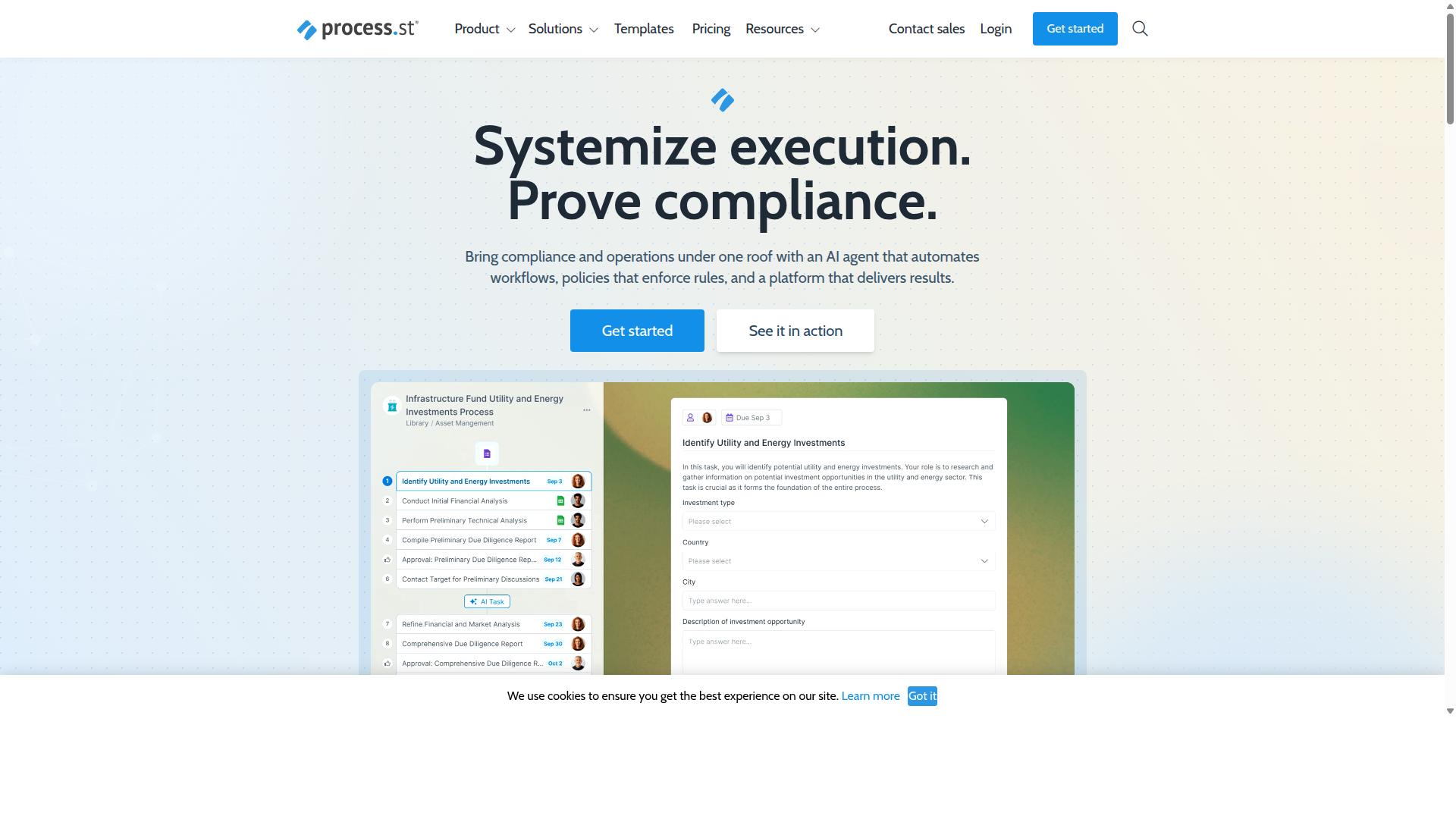
Process Street is a cloud-based compliance operations platform that helps organizations automate business processes and maintain audit-ready records.
The platform serves global teams across many industries. It combines process documentation with automation capabilities to create consistent workflows and reliable documentation standards. For related context, see our guide to Earned Media vs Paid Media: Mistakes and Better Approaches.
Process Street offers three main products. Docs handles document management and policy control. Ops manages workflow automation and process orchestration. Cora functions as an AI compliance and risk agent.
The platform helps organizations standardize processes. It proves compliance through structured documentation. Teams maintain operational consistency through these integrated tools.
Process Street connects process documentation directly with automation features. This combination allows teams to create documented procedures that trigger automated actions and generate consistent outputs without manual intervention.
Why Process Street Is the Best for Document Automation
First sentence: Process Street excels at document automation through policy-controlled templates, automatic version tracking, and export options that meet compliance standards.
Process Street provides Docs as a dedicated document management system that supports full governance requirements. Teams working with ISO 9001, SOC 2, SOX, or FDA standards can maintain controlled documentation within a single platform.
The Docs product keeps every policy and procedure aligned with regulatory expectations. Version history stays visible so authorized users can see exactly when changes occurred and who made them.
Users can generate PDF files directly from approved documents. This automatic export function removes manual formatting steps and supports consistent record keeping across audits.
Experts recommend building document templates once, then reusing them for recurring processes. Process Street stores these templates with built-in approval workflows so teams follow the same structure each time.
Role-based access keeps sensitive documents visible only to the right people. This permission model supports compliance needs while allowing collaboration across departments.
Platform analytics show document activity and completion rates. Managers can track whether procedures are being followed without manual status checks.
Integrations with Zapier, Microsoft Power Automate, Tray.io, Make, and public API access connect Process Street to other systems. Data flows between tools without requiring custom code.
Document automation becomes reliable when templates, approvals, and exports work together in one place. Process Street combines these capabilities through its Docs product and supporting platform features.
Key Features and What Makes Process Street Stand Out
Three specialized products give Process Street distinct advantages in workflow automation and compliance management.
The platform integrates document control, workflow execution, and AI monitoring into one system. This combination addresses the gap between documented procedures and actual daily operations.
Teams often struggle when policies exist in static files while work happens elsewhere. Process Street bridges that gap through connected products that work together.
Each component handles a specific part of the automation challenge. Together they create a complete system for managing both documentation and execution.
Docs: Document Management and Policy Control
Docs centralizes policy management with governance controls for multiple compliance frameworks.
This product provides full governance for ISO 9001, SOC 2, SOX, and FDA requirements. Organizations can maintain compliance across different regulatory standards from a single location.
Version control with audit trails tracks every change made to documents. Teams can see who modified what and when without searching through email threads or file versions.
Role-based access controls limit who can view or edit specific documents. Different departments receive appropriate permissions based on their responsibilities and clearance levels.
Document export to PDF creates shareable files for external stakeholders. This feature supports audits and reviews that require official document formats.
Ops: Workflow Automation and Process Orchestration
Ops converts documented policies into automated, AI-powered workflows that reduce manual work.
Unlimited workflows and tasks allow teams to automate processes of any size. There are no artificial limits on the number of procedures that can run simultaneously.
Conditional logic for task routing directs work based on specific conditions. Different responses trigger different next steps without manual intervention.
Automated notifications keep team members informed about task status. Users receive updates when work requires their attention or when deadlines approach.
Recurring task scheduling handles routine work that happens on regular intervals. Drag-and-drop workflow builder lets users create these automations without coding skills.
Cora: AI Compliance Agent
Cora is the AI compliance agent that monitors workflows and flags policy violations in real time.
This layer enforces compliance rules across all active processes. The system watches for deviations and responds immediately rather than discovering issues during audits.
Instant alerts on deviations notify the right people when work strays from established procedures. These notifications happen as problems occur, not weeks later.
Cora generates audit-ready proof automatically through continuous monitoring. Compliance documentation builds itself during normal operations rather than requiring separate collection efforts.
Pricing and Plans
Process Street offers three pricing tiers designed for different organization sizes and automation needs.
The Startup plan serves smaller teams with 5 users and 10 guests. This tier includes unlimited workflows and tasks plus 100 automation actions per month.
Startup users also receive access to 10 automation apps and up to 5,000 Data Set records. Public API access supports 50 calls monthly for basic integration needs.
The Pro plan provides custom user and guest counts along with up to 10,000 Data Set records. Teams gain all automation apps plus custom automation actions and API call limits.
Enterprise customers receive custom Data Set records and unlimited Public API access. This tier includes a dedicated Success Manager, priority support, and fully-managed workflows.
Enterprise features also cover custom integrations, bulk document import, process consulting, and personalized team training. Process Street provides a 14-day free trial on the Pro plan with no credit card required.
Trust Signals
Independent certifications and usage statistics demonstrate Process Street's reliability for regulated environments.
SOC 2 Type II and ISO 27001 certifications confirm that data handling meets strict standards for security and privacy. Organizations that require audit trails and compliance tracking can use the platform without additional certification overhead.
Process Street currently serves over 3,000 companies and 1 million users worldwide. These adoption figures reflect consistent performance in document automation and workflow automation across different industries.
Companies report that 49,000 employees have completed standardized onboarding through the system. This scale shows the platform can handle large user bases while maintaining process documentation quality.
Additional compliance features include HIPAA with a BAA available upon request, GDPR, CCPA, and AWS CIS compliance. These options support regulated industries that need specific data protection measures.
Data from the platform is never used to train AI models, addressing concerns about data privacy that arise with other cloud-based solutions. The five-minute average response time and 98 percent customer rating further indicate reliable support when issues occur.
Who Should Use Process Street
Process Street serves operations, compliance, HR, finance, and IT teams across six major industries. This SaaS platform helps organizations automate document-heavy processes with workflow automation and process documentation tools. Teams that handle repetitive approvals and compliance tracking often see immediate benefits from its structured approach.
Departments gain the most value when their daily work involves standard operating procedures and audit trails. Operations teams use it to standardize quality tracking across multiple locations. Compliance departments rely on version control and compliance tracking to maintain ISO standards without manual oversight.
Customer management and human resources teams benefit from employee onboarding and client onboarding workflows. These processes require consistent data capture, conditional logic, and task assignment across multiple stakeholders. Finance departments apply the same structure to invoice processing and expense approvals.
IT and security teams use Process Street for access control documentation and security audit preparation. The platform supports role-based access and user permissions that align with enterprise security requirements. Document generation becomes automated rather than manual.
Six industries see the strongest adoption patterns. Financial services organizations use it for regulatory compliance workflows. Real estate and property management companies streamline lease documentation and maintenance tracking. Manufacturing firms apply process templates to quality control procedures.
Healthcare providers leverage the platform for patient intake and regulatory documentation. Professional services firms standardize client engagement processes. Technology companies use it for internal policy management and software deployment checklists. Capital markets organizations apply similar automation to deal documentation and compliance reporting.
Final Verdict
Process Street delivers a complete compliance operations platform for teams that need documented, automated, and auditable processes.
The platform combines document automation with workflow automation to help businesses manage process documentation, SOP creation, and checklist automation in one place.
Built as a SaaS platform, Process Street offers cloud-based access and no-code tools that let teams build and run processes without technical overhead.
Support is available through email and chat with a 5-minute average response time and a 98 percent customer rating.
Teams can reach sales directly to discuss their automation needs.
Process Street is also available on AWS Marketplace for organizations that prefer that procurement method.
Recommended Resources: